If you’ve ever stood in a manufacturing plant watching a production line grind to a halt because a tank ran dry at the wrong moment, or waited hours for a level reading that turned out to be wildly off, you know how critical a good level meter is. As someone who’s spent the last decade supplying level meters to industries across agriculture, chemical processing, water treatment, and food and beverage, I’ve seen too many teams pick the wrong meter because they focused only on upfront cost, or didn’t ask the right questions about their specific environment. Today, I want to break down the factors I walk through with every new customer, because getting these right doesn’t just save money—it saves time, reduces waste, and keeps operations running smoothly. Level Meter
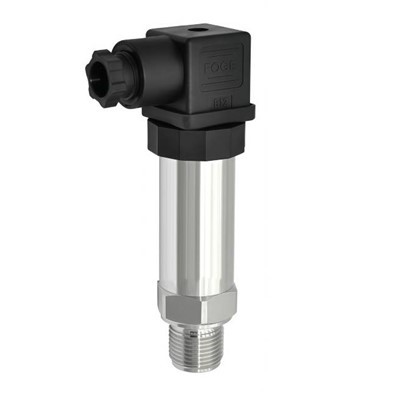
First and foremost, you have to start with the type of material you’re measuring. This sounds obvious, but you’d be surprised how many people overlook the unique properties of what’s inside their tanks. Let’s say you’re handling something as simple as grain in a farm silo. Grain is a bulk solid, right? It’s granular, has a tendency to rattle, and builds up dust. If you try to use a basic ultrasonic level meter here, the sound waves will bounce off the dust particles or the uneven grain surface and give you a reading that’s inches off—worse, it might miss small, slow changes entirely. For bulk solids like grain, plastic pellets, or powdered cement, I almost always recommend either a guided wave radar (GWR) meter or a rotary paddle switch. GWR works by sending a radar signal down a cable or rod that goes straight into the material, so it bypasses dust and surface irregularities. Rotary paddle switches are simpler, more affordable for low-volume applications, and they work by spinning a paddle that stops when it’s covered in material, telling you when the tank is full or empty.
Now flip that to a liquid—say, a corrosive chemical in a chemical processing plant. If you use a magnetic level gauge that’s not made from the right material, the chemical will eat through the housing, leading to leaks, spills, and expensive downtime. Same goes for conductive liquids: if you use a non-contact ultrasonic meter in a tank of highly conductive water, the signal will absorb into the liquid instead of bouncing back, and you’ll get no reading at all. Conductive liquids need either a conductive probe level switch or a GWR meter with an insulated cable that can handle the conductivity. For non-conductive liquids like oil or certain food-grade syrups, ultrasonic or radar meters work well, but you still have to consider viscosity. Thick, sticky liquids like molasses or chocolate will coat sensor surfaces, which can throw off ultrasonic or contact probe readings. In those cases, GWR is better because the radar signal doesn’t care about surface coatings, or you can opt for a vibrating fork level switch that uses resonance to detect material, and the vibration keeps the fork self-cleaning.
Next, your operating environment is almost as important as the material itself. I’ve had a customer bring me a story about a level meter that worked perfectly in their lab, but failed within a week when they installed it on an outdoor tank in a desert. The problem? Extreme temperature swings—110°F during the day, 30°F at night—that caused the ultrasonic sensor’s casing to warp, and dust storms that clogged the sound port. Another customer in a wastewater treatment plant had issues with moisture and bacteria growing on the sensor, which turned a clear radar signal into a murky one. When assessing your environment, start with the basics: temperature range, pressure, and whether it’s hazardous (classified as a Class I Division 1 area, for example, where flammable gases or vapors are present). If it’s hazardous, you can’t just pick any meter—you need one that’s rated for explosion protection, like intrinsically safe or explosion-proof certification. That’s non-negotiable; I’ve seen companies cut corners here and end up with fines, safety incidents, or total equipment loss.
Then there’s pressure. If you’re measuring levels in a high-pressure reactor in a pharmaceutical plant, a standard level meter won’t hold up. GWR and radar meters work at higher pressures, but you have to check the pressure rating of the process connection and the sensor housing. For low-pressure applications like atmospheric storage tanks, ultrasonic is fine, but for anything above 100 PSI, guided wave radar is usually a safer bet because it’s designed to handle high pressures without signal loss. Also, think about vibration. If your tank is on a moving platform, like a tanker truck or a conveyer in a mining operation, vibration can mess up the reading from ultrasonic meters, which rely on a stable sound path. In those cases, contact-level devices like pressure transducers or GWR (which has a rigid cable that can withstand minor vibration) are more reliable.
Another big factor is accuracy and range requirements. No two operations need the same level of precision. A farm that just needs to know if their silo is 10% full or 90% full doesn’t need a meter that measures down to a tenth of an inch. They can go with a rotary paddle switch that gives them a simple high/low signal, which is all they need to plan deliveries. But a food and beverage plant that’s filling bottles of syrup, where even a 0.5-inch level error can lead to overfilling or underfilling hundreds of bottles an hour? They need a meter that’s accurate to within a millimeter, so GWR or non-contact radar is the way to go. Range matters too. If you have a small tank holding 50 gallons, a meter designed for a 50-foot silo will be overkill, more expensive, and might not work as well at short ranges—ultrasonic meters, for example, can struggle with very small tanks because the sound wave reflects off the tank wall instead of the material surface. Conversely, a small tank meter will fail in a 50-foot tank because it can’t send a signal that far. That’s why we always ask customers for their tank dimensions upfront, not just what they’re measuring inside.
Installation and maintenance requirements are also key, especially if you have a small operations team that can’t spare hours calibrating or fixing equipment every month. Some level meters are so complex that you need a certified technician to install and calibrate them, which adds to your long-term costs. Others are plug-and-play, easy to mount on a tank, and can be calibrated by your regular maintenance team in 10 minutes. For example, ultrasonic meters are pretty straightforward—you just mount them on the top of the tank, point them at the material surface, and program the tank dimensions. Guided wave radar takes a bit more setup, but once it’s installed, it has almost no moving parts and requires very little maintenance, which is a big plus for remote or hard-to-reach tanks like those on a tall tower. If you have remote tanks that you can’t check on weekly, you want a meter that has diagnostic alerts—so if the signal drops or the sensor gets clogged, you’ll get a notification on your control panel, instead of having to drive out to the site and find out the meter is broken.
Cost, I know, is always top of mind, but I can’t stress enough that upfront cost isn’t the only cost to consider. A $200 ultrasonic meter might seem like a steal, but if it fails every six months in a corrosive environment, costing you $1,000 in downtime and replacement parts each year, it’s way more expensive than a $500 GWR meter that lasts 10 years with no issues. I’ve had customers come to me after buying cheap meters from big box suppliers, only to spend twice as much on repairs and lost production in six months than they would have spent on a high-quality meter from the start. That said, you also don’t want to pay for features you don’t need. If you’re just measuring water in an atmospheric tank, you don’t need an explosion-rated, high-pressure GWR meter—you can get a reliable ultrasonic meter for a fraction of the cost. It’s all about balancing your specific needs with the meter’s capabilities.
Let me also talk about communication and integration, because most level meters aren’t standalone devices anymore. They need to connect to your SCADA system, your mobile app, or your control room so you can track levels in real time, set up alerts when levels get too high or too low, and automate processes like filling or pumping. Some meters only have basic analog outputs (4-20 mA), which work for older systems, but if you have a modern digital system, you’ll want a meter that supports protocols like Modbus, HART, or Ethernet/IP. That way, you can pull level data directly into your existing software, no extra converters or adapters needed. I’ve seen teams waste hours trying to integrate a level meter that uses an old, proprietary protocol with their new system, just because they didn’t check for compatible communication options upfront.
Now, I want to share a quick example that brings all these factors together, because it’s something I worked on last year. A customer runs a craft brewery, and they needed level meters for their fermentation tanks and storage tanks. First, they were measuring liquid wort in the fermentation tanks—this is a conductive liquid, but it’s also foamy, and it has temperature swings during fermentation. They initially looked at ultrasonic meters, but the foam was bouncing the sound waves, so the readings were all over the place. We went with a GWR meter that has a small, rigid cable— the radar signal cuts through the foam, and it handles the temperature changes easily. Then, for their storage tanks for finished beer, they needed a meter that’s food-grade (no materials that can leach into the beer) and accurate enough to track inventory for their bottling line. We used a non-contact radar meter that’s rated for food safety, has a high accuracy, and integrates with their existing inventory management software. They told us later that this setup cut their level-related errors by 90% and saved them over $15,000 a year in wasted product. That’s exactly what happens when you get all the factors right.
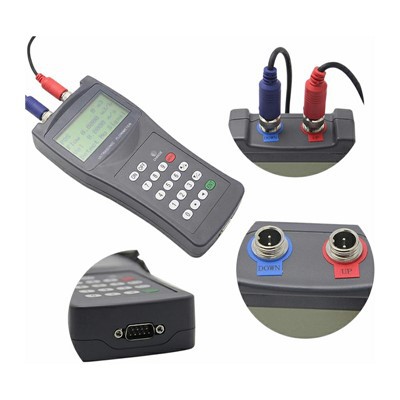
I think a lot of people treat level meters as a commodity, like any part that just has to do its job, but they’re actually a critical part of your operation’s efficiency and safety. Picking the wrong one can lead to everything from minor headaches to major incidents—spills, equipment damage, lost product, even safety risks for your team. Over the years, I’ve built my business on helping customers navigate these factors, because I don’t want them to make the same mistakes I’ve seen so many others make.
Civil Engineering Test If you’re in the market for a new level meter, or you’re having issues with your current one, let’s connect. I can walk you through each of these factors, ask the right questions about your specific application, and help you find a meter that fits your needs, your budget, and your long-term goals. You don’t have to navigate this alone—we’re here to make sure you get the right level meter for your operation, so you can stop worrying about bad readings and start focusing on what you do best.
References
- Level Measurement Fundamentals. ISA, 2021.
- Guide to Selecting Level Measurement Technologies. Emerson Automation Solutions, 2022.
- Hazardous Area Classification for Industrial Sensors. National Fire Protection Association, 2020.
- Level Measurement for Bulk Solids: Best Practices. Powder & Bulk Solids Magazine, 2023.
- Food-Grade Level Measurement Standards. 3-A Sanitary Standards, Inc., 2022.
Dalian Yheng Technology Co., Ltd.
Dalian Yheng Technology Co., Ltd. is one of the leading level meter manufacturers and suppliers in China, also supports customized service. We warmly welcome you to buy high quality level meter in stock here from our factory. Contact us for more details.
Address: F1605, NO.10 Huoju road, High-tech Industrial Zone, Dalian, China
E-mail: admin@dlyheng.com
WebSite: https://www.yhengphmeter.com/
