If you’ve ever walked through a medical device manufacturing floor, you’ll notice a quiet undercurrent of precision that separates good products from ones that make clinicians and patients uneasy. That’s never more true than when you’re talking about a urine bag and blood bag production line. For years, I’ve been on the ground working with clients in hospitals, third-party medical device manufacturers, and startup firms that need equipment flexible enough to handle not just the standard raw materials, but the unexpected variations that come with medical-grade supplies. The question I get more than any other is this: how much can my production line really handle different raw materials without sacrificing quality, compliance, or output? Urine Bagblood Bag Production Line
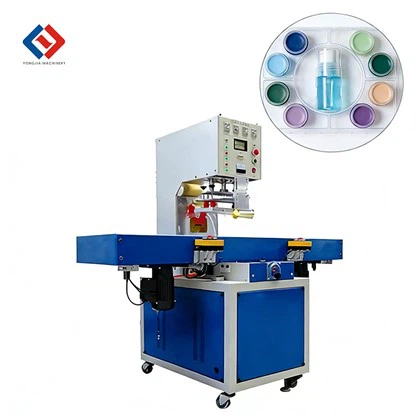
The short answer isn’t a number—it’s a framework built on years of troubleshooting, testing, and real-world experience. Let me break that down for anyone who’s investing in a line, updating an existing setup, or just curious about how these critical medical products get made.
First, let’s start with the basics of what a urine bag and blood bag production line actually processes. At its core, these bags are made from a few key materials: PVC (polyvinyl chloride) is still the workhorse for most single-use medical bags, thanks to its durability, clarity, and ability to be sealed reliably. But there’s also a growing shift toward alternative materials like TPE (thermoplastic elastomer), which is phthalate-free, or even bio-based polymers for clients who prioritize sustainability. The problem is, these materials don’t act the same on a production line. A line built exclusively for rigid PVC won’t run right on softer TPE, and vice versa. That’s where a line’s ability to adapt matters most.
I’ve seen clients try to cut costs by buying a one-size-fits-all line, only to hit a wall within six months. Take one mid-sized medical device maker in the Midwest a couple of years back—they originally bought a line calibrated only for standard PVC urine bags, then decided to launch a line of phthalate-free TPE bags for pediatric use. They tried running the old setup without adjusting the tensioners, sealers, and film feeding systems, and ended up with a 20% scrap rate, plus downtime that cost them thousands in lost orders. The fix? We retrofitted their existing line with adjustable roller sets, variable speed drives, and a temperature control unit for heat sealing that could adapt to TPE’s lower melting point. Suddenly, they could switch between materials in under 20 minutes, with scrap dropping to less than 2%. That’s the kind of handling ability that separates a functional line from a valuable one.
So what specific factors determine how well a production line handles different raw materials? Let’s go through the key ones.
First is the film feeding and handling system. Raw medical-grade films aren’t uniform—even within the same material, thickness can vary by up to 0.05 mm depending on the manufacturer, and surface texture changes when switching between PVC and TPE. The feeding system needs to control tension consistently, because too much tension stretches the film out of shape, and too little causes it to wrinkle, leading to misaligned seals or bags that leak. A modular line lets you adjust tension rollers for different film widths and thicknesses, instead of being locked to a single spec. I’ve also worked with lines that have automatic edge detection sensors—these adjust in real time if the film shifts, which is a lifesaver when switching between materials that have different light transmission properties (PVC is more opaque than clear TPE, for example). That’s not a luxury feature; it’s a necessity for consistent quality.
Next is the heat sealing and welding module. Sealing is the most critical step in making a urine or blood bag—if a seal fails, the product is useless. Different materials require vastly different seal temperatures, pressures, and hold times. PVC typically needs higher temperatures (around 160-180°C) to melt properly, while TPE only needs 120-150°C. Even adhesive-based raw materials, used in some specialty urine bags with integrated measurement graduations, require different heating profiles. A line with manual temperature adjustments won’t cut it anymore—modern lines for these products use PID (proportional-integral-derivative) temperature controllers that let you save different profiles for each material, so you can switch in minutes instead of waiting for the machine to heat up or cool down. I’ve seen lines without this feature waste 2-3 hours every time they switch materials, which adds up to hundreds of thousands of dollars in lost production annually.
Then there’s the assembly and component integration. Urine and blood bags aren’t just a piece of film—they have ports, valves, drainage tubes, and measurement strips. These components are often made from different materials than the bag itself, and inserting them into the bag requires precision handling. For example, a blood bag may have a PVC port, while the bag is made of TPE. A line with rigid component feeders designed only for PVC might jam when switching to smaller TPE components. The best lines here have modular component stations, with adjustable holders and feeders that can be swapped out or adjusted for different part sizes and materials. One client in Southeast Asia told me that after upgrading their component handling system, they could switch between urine bags with integral sensors and standard blood bags in 15 minutes, compared to the 2 hours it took before. That kind of flexibility directly translates to faster turnaround on custom orders, which is a big selling point for many medical device makers.
Now, it’s not just about the machines themselves—it’s about validation and compliance. Medical products have strict regulatory requirements (ISO 13485, FDA 21 CFR, EU MDR), and any time you change a raw material or process, you have to re-validate the product to make sure it’s safe and effective. A good production line won’t just handle different raw materials—it will also have the data collection capabilities to track every run, test seals, and document that the product meets all standards, no matter what material you’re using. I’ve worked with a European client that switched from PVC to bio-based polyethylene bags and was able to get full regulatory approval in 6 weeks, largely because their line had built-in quality monitoring systems that automatically logged seal strength, film thickness, and component placement for every batch. Without that documentation, even a line that can run the material would be useless for a regulated market.
I know what some of you are thinking: “This sounds like a lot of complexity. Why not just stick to one material?” The reality is that the medical market is changing fast. Hospitals are pushing for more sustainable products, pediatric patients need softer, phthalate-free bags, and specialty procedures (like apheresis or pediatric blood transfusions) require bags with specific material properties. A line that can only handle one material limits your ability to adapt to those demands. I’ve seen small manufacturers go out of business because they couldn’t expand their product line to meet new hospital contracts, while ones with flexible lines grew their revenue by 30% in three years by offering both standard and custom products.
Of course, there are limits. No production line can handle every raw material on the market. For example, if you try to run a rigid plastic that’s not designed for medical use, or a material that’s not compatible with the heat sealing process, you’ll end up with scrap or failed products. The key is choosing a line that’s designed to handle the materials you know you’ll use today, while leaving room to add new materials as needed. That means working with a supplier who tests your specific raw materials during the line setup, not just relying on generic specs. I always make a point to bring raw material samples to clients during the factory acceptance test, so we can run them on the line before it ships, adjust any settings, and make sure it works for their exact needs.
At the end of the day, a urine bag and blood bag production line’s ability to handle different raw materials isn’t just a technical feature—it’s a competitive advantage. It lets you meet diverse customer needs, reduce downtime, lower scrap rates, and stay compliant as regulations and materials evolve. If you’re considering upgrading your line, or just want to make sure your current setup is working as hard as it can, don’t just ask about the machine’s specs—ask about how it performs with the materials you use, how easy it is to switch between materials, and what support you’ll get if you want to add new materials down the line.
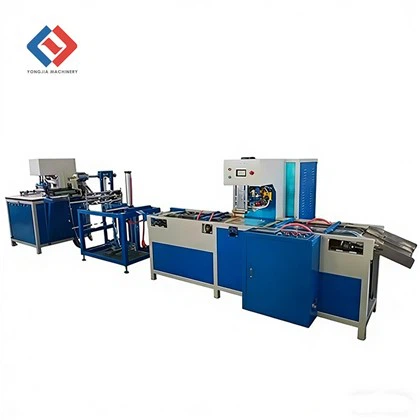
If you’re looking to expand your product range, reduce production costs, or invest in a line that can adapt to the changing needs of medical manufacturing, I’m here to help. We work with manufacturers of all sizes, from small startups to large global firms, to design, retrofit, and support urine bag and blood bag production lines that balance flexibility, quality, and compliance. To learn more about how our lines can handle your specific raw material needs, reach out to us to discuss your production goals and requirements.
Blister Packaging Machine References
- International Organization for Standardization (ISO). ISO 13485:2016, Medical devices — Quality management systems — Requirements for regulatory purposes. ISO, Geneva, 2016.
- U.S. Food and Drug Administration (FDA). 21 CFR Part 820, Quality System Regulation. FDA, Silver Spring, MD, 2023.
- European Commission. Medical Device Regulation (MDR) 2017/745. EC, Brussels, 2017.
- American Society for Testing and Materials (ASTM). F2095-18, Standard Specification for Poly(Vinyl Chloride) (PVC) Film for Single-Use Medical Applications. ASTM, West Conshohocken, PA, 2018.
- Thermoplastic Elastomer Suppliers Association (TESA). TPE Medical Grade Material Guidelines for Packaging and Single-Use Devices. TESA, Washington, DC, 2022.
Dongguan Yongjia Machinery Equipment Co., Ltd.
We are one of the most reliable urine bagblood bag production line manufacturers and suppliers in China, specialized in providing high quality customized service. Please feel free to wholesale advanced urine bagblood bag production line at low price from our factory. For quotation, contact us now.
Address: No. 240, Chashan South Road, Chashan Town, Dongguan City, Guangdong Province, China
E-mail: info@yjwelding.com
WebSite: https://www.yjhighfrequencymachine.com/
