If you’re a stamping parts supplier serving industries that operate in marine environments—from shipbuilding and offshore wind platforms to coastal infrastructure and recreational boating—you already know that not all metal stamping is created equal. Corrosion is the single biggest threat to marine components: it erodes structural integrity, causes unexpected failures, raises maintenance costs, and can even lead to catastrophic safety risks or environmental damage. Over the 12 years I’ve been running my stamping shop, I’ve seen far too many clients come to me with parts that corroded within a year of installation, not because the stamping process was bad, but because they didn’t understand the specific corrosion resistance requirements unique to marine use. Today, I want to break down what those requirements actually are, why they matter, and how we design and manufacture our stamping parts to meet them. Stamping Parts
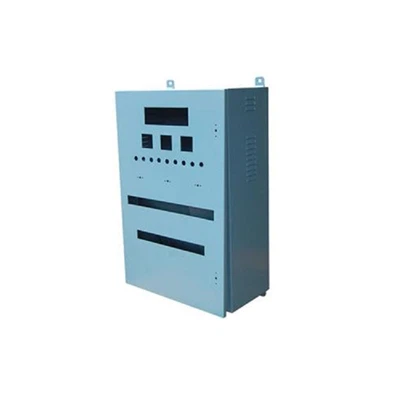
First, let’s start with the core of the problem: marine environments are relentlessly harsh. It’s not just salt in the air—saltwater (and even atmospheric salt deposits) are electrolytes, meaning they accelerate electrochemical corrosion far faster than most on-land environments. Add in constant temperature fluctuations, high humidity, UV exposure from the sun, and even the occasional splash of oil or chemical runoff from ships, and you have conditions that most standard stamping parts can’t handle. But corrosion resistance isn’t a one-size-fits-all box to check. There are tiered requirements based on exactly where the part will be used on a vessel or structure, and those tiers directly impact material selection, stamping techniques, and post-production treatments.
The first key requirement I always discuss with new clients is material compatibility with the marine environment. A lot of general-purpose stamping parts use mild carbon steel, which is cheap and easy to form, but in marine conditions, it will rust through in months if left unprotected. That’s a hard pass for any critical marine component. Instead, we offer three primary material groups, each tailored to different corrosion risks. For parts that are in continuous contact with saltwater—like hull fasteners, pipe flanges, or underwater structural brackets—we use 316L stainless steel. Unlike the more common 304 stainless, which only has chromium as a corrosion barrier, 316L adds molybdenum. That molybdenum makes it resistant to pitting and crevice corrosion, the type that forms in small gaps between parts (like where two stamping holes line up) and is especially aggressive in saltwater. We also use duplex stainless steel for heavy-duty offshore components, like rig support legs: it’s a mix of austenitic and ferritic stainless, so it has double the strength of standard stainless and excellent resistance to stress corrosion cracking, which plagues parts that are under constant tension in marine settings. For less exposed parts—like interior bulkhead brackets, control panel housings, or small hardware that only sees intermittent salt spray (not full submersion)—we often use hot-dip galvanized steel, or aluminum alloy 5052. Aluminum 5052 has a natural oxide layer that self-heals if scratched, so it works well for parts that are above the waterline but still exposed to coastal air, and it’s lighter than stainless, which is a plus for weight-sensitive recreational boats.
But even the best marine-grade material won’t perform right if the stamping process introduces flaws that weaken corrosion resistance. That’s the second big requirement: stamping technique that preserves material integrity. When a customer comes to us with a design, we don’t just stamp the part and call it done—we pay close attention to edges, burrs, and work hardening, all of which are hotspots for corrosion. For example, when we punch holes or cut edges on a stamping, we use precision turret punches with sharp, calibrated dies. Blunt dies leave rough, ragged edges that trap saltwater and create microscopic gaps where corrosion can start. We deburr every single edge, and for critical load-bearing parts, we even do a light polish on cut edges to smooth them out. Work hardening is another issue: when steel is stamped at too high a force, the metal becomes brittle, and that brittle area is much more prone to corrosion and cracking. So we adjust our stamping parameters based on the material: for 316L stainless, we use gradual press force, and for thinner aluminum parts, we add lubricants that prevent friction-induced work hardening without leaving residue that can cause future corrosion. I once had a client who tried to save money by using a local shop for a small batch of hull brackets; they stamped the parts with blunt dies, leaving deep burrs. Within six months, those burrs were the starting point for pinhole corrosion, and he had to replace all 500 parts. That’s a mistake I never want any of my clients to make.
Next, coating and post-production treatment tailored to the specific marine zone the part will occupy. This is where a lot of suppliers cut corners, using a generic zinc coat that will peel off or rust through in saltwater. We categorize marine zones into three distinct levels, and our treatments match each exactly. The first is submerged zone: parts that are fully underwater, like seachest screens, propeller shaft brackets, or underwater piping connections. For these, we use a dual-coat system: first, a passivation treatment for stainless steel, which removes free iron from the surface and strengthens the protective chromium oxide layer that’s key to corrosion resistance. For galvanized steel parts in the submerged zone, we add a layer of epoxy primer on top of the hot dip zinc to prevent galvanic corrosion between steel and other metals (like copper pipes that are common in ship plumbing). The second zone is the splash zone: parts that are constantly exposed to salt spray, alternating between wet and dry, like deck railings, anchor chains, or hull plates near the waterline. This is actually one of the most corrosive zones because saltwater dries and concentrates on the surface, leaving behind corrosive salts. For splash zone parts, we use a powder coat finish specifically formulated for marine use, not the standard interior powder coat sold at home improvement stores. Our marine powder coat has UV inhibitors to resist sun damage that would cause the coat to crack, and it’s tested to withstand 500 hours of salt spray exposure without peeling or blistering. The third zone is atmospheric zone: parts above the splash zone, like cabin door hinges, navigation equipment brackets, or antenna mounts. For these, we still apply anti-corrosion treatments, but we can use a lighter finish, like anodizing for aluminum parts, which is thinner, lightweight, and resists salt spray far better than untreated aluminum.
Another critical, often overlooked requirement is resistance to galvanic corrosion. Galvanic corrosion happens when two different metals are in contact in the presence of an electrolyte (aka saltwater), and one metal corrodes to protect the other. For example, if a stainless steel stamping bracket is bolted to a copper hull plate, the steel will corrode rapidly to stop the copper from corroding. That’s a huge problem in marine applications, where different metals are constantly joined. So our requirement here is simple: we either insulate between different metals with a non-conductive spacer, or we specify matching metals for the assembly. For example, if a client needs a bracket to attach to a copper pipe, we stamp the bracket out of aluminum instead of 316L, because aluminum and copper have similar electrochemical potentials, so neither will corrode to protect the other. We also make sure that all fasteners we use (whether we supply them or the client provides them) are matched to the stamping material to avoid this issue. I once worked with a small boat manufacturer who had thousands of brackets corrode because they used steel bolts with aluminum brackets—they didn’t realize galvanic corrosion was happening, and they ended up paying way more to replace the parts than if they had just specified matched metals.
Testing is the final requirement that separates suppliers that talk about corrosion resistance from those that actually deliver it. We don’t just guess that a part will hold up in marine conditions; we test every batch of stamping parts we supply to meet the relevant industry standards. The main standard we use is ASTM B117, which is the salt spray test standard. This test exposes parts to a continuous salt mist (5% saltwater solution, 35 degrees Celsius) for a set number of hours, and we check for corrosion, blistering, or coating failure. For submerged zone parts, we test for 1000 hours of salt spray exposure with no more than 5% surface corrosion. For splash zone parts, we test for 500 hours, and for atmospheric zone parts, 200 hours. We also do additional testing for stress corrosion cracking, which is a big issue for offshore components that are under constant tension. We use bent beam tests to simulate the stress of installation and service, and check for cracks after salt spray exposure. We even test for UV resistance on parts that will be exposed to direct sunlight for long periods, because UV breaks down coatings, leading to corrosion under the surface.
Over the years, I’ve found that the best marine stamping parts aren’t just about checking a list of requirements—they’re about understanding the client’s specific use case. A bracket for a 30-foot recreational fishing boat has different needs than a part for a 1000-ton offshore wind turbine foundation. That’s why we start every project with a consultation, not a quote. We ask where the part will be installed, what environment it’s exposed to, what load it will carry, and what the expected service life is. If a client says they need a part for a small coastal dock that only needs to last 10 years, we can recommend a cost-effective aluminum alloy 5052 with anodizing that’s cheaper than 316L stainless. If they need a part for an offshore rig that has to last 25 years or more, we’ll specify duplex stainless steel with a marine powder coat, even if it’s a bit more expensive, because that’s what will hold up.
At the end of the day, corrosion resistance in marine stamping parts is about long-term reliability. A part that costs a little more upfront but lasts 10 years is way better than a cheap part that fails in 1 year, causing downtime, repair costs, and even safety risks. We’ve built our business on that principle, and we’ve worked with shipyards, offshore operators, boat manufacturers, and coastal infrastructure companies across the country to deliver stamping parts that meet their exact corrosion resistance requirements.

If you’re a designer, project manager, or procurement lead working on a marine application, and you want to make sure your stamping parts hold up to the harsh marine environment, let’s talk. We can walk through your specific requirements, recommend the right materials, stamping techniques, and coatings, and even provide test data to verify that the parts will perform as needed. Don’t wait until a small corrosion issue turns into a big, expensive problem. Reach out to our team to discuss your project today.
Cnc Turned Parts References
- ASM International. (2003). Corrosion: Environments and Industries (Vol. 13B). ASM International.
- ASTM International. (2021). Standard Practice for Operating Salt Spray (Fog) Apparatus (ASTM B117-19). ASTM International.
- Melchers, R. E. (2012). Corrosion of steel in marine environments: Rates, mechanisms, and data. Corrosion Science, 55, 228-236.
- Davis, J. R. (Ed.). (2001). Stainless Steels: ASM Specialty Handbook. ASM International.
Hangzhou Zhalihui Import And Export Co., Ltd.
We are one of the most experienced stamping parts manufacturers and suppliers in China, specialized in providing high quality customized products. Please feel free to buy discount stamping parts in stock here from our factory. Contact us for quotation.
Address: Room 2801, Building 2, Taifu Plaza, No.17, Tonghui Middle Road, Chengxiang Street, Xiaoshan, Hangzhou, Zhejiang
E-mail: Chars_1979@hotmail.com
WebSite: https://www.zhalihui.com/
