Hey there, it’s Jake from your go-to straight stainless steel tube supplier, and today I’m breaking down something that gives every engineer and fabricator headaches: how to keep straight stainless steel tubes straight. I’ve been in this game for 12 years, seen way too many projects derail because a batch of tubes came warped, and let’s be real—no one wants to waste time or money fixing a straightness mess. If you’re here because you’re tired of tubes that bend like a cheap straw after one use, this post’s for you. No stuffy textbook jargon, just real stuff we do in our shop every single day. Straight Stainless Steel Tube

First off, let’s get one thing straight (pun 100% intended): straightness for stainless steel tubes isn’t just “does it look straight?” Most folks don’t realize there’s an actual industry standard here—we’re talking about the deviation from a perfect straight line along the tube’s length, usually measured in millimeters per meter. That deviation matters so much because it affects everything from fluid flow in industrial pipes to fit in custom machinery parts. A warped tube? It’ll leak when you weld it, seize up when you thread it, or throw off your whole assembly. So straightness isn’t just a quality check—it’s the foundation of a good part.
Now, how do we actually nail this? It starts way before you even get to the finishing stage, not at the end when it’s too late. Let’s walk through our process step by step, the stuff that keeps our customers coming back.
First up, raw material selection—this is non-negotiable. I’ve had customers come to us with cheap, off-the-shelf tubes from some random supplier, and 9 times out of 10, those are the ones that come warped. Why? Because even before we do anything, the raw stainless steel coil or round bar has internal stresses that will make it bend if we don’t handle it right. We only work with mills that send us certified material with consistent grain structure and low residual stress. No cutting corners here. If the raw stock is already slightly bent after being rolled or cut, we send it right back—we don’t even bother processing it. Because if the base is messed up, the finished product will be too. That’s rule number one for us.
Next, the forming process. Most straight stainless steel tubes are made either by seamless drawing or welded tubing, and both have their own potential for warping. Let’s talk seamless first: when you draw a seamless tube through a die to shrink its diameter, you have to control the tension and the speed. If you pull too hard on one side, it’ll stretch unevenly and warp. We use state-of-the-art drawing machines with real-time sensors that track tension across the entire tube wall as it’s being pulled. No human guesstimating here—those sensors alert our guys if the tension is off by even 5%, so they adjust on the fly. That’s a big one. For welded tubes, the weld seam is another weak spot. When we laser-weld or TIG-weld the longitudinal seam, heat causes expansion and contraction, which can make the tube bend towards the weld. To fix that, we pre-heat the edges before welding and immediately cool the entire tube evenly after the weld is done, not just the seam. We also use seam straightening rolls right after welding to nudge it back into line before the metal cools and sets in a bent shape. I’ve seen other shops skip that step because it adds a couple bucks per tube, but it’s the difference between a perfect part and one that needs to be scrapped.
Then comes heat treatment—this is where a lot of guys mess up. Stainless steel is heat-treated to remove residual stress from forming, right? If you skip this step, the internal stresses from drawing or welding will slowly release over time, making the tube warp months after you installed it. That’s a nightmare—no one wants to fix a pipe system a year later because the tubes bent on their own. Our stress relieving process: we heat the tubes evenly in a vacuum oven (no oxidation, so the surface stays smooth) to around 1100°F, hold them there for 2 hours, then cool them super slowly over 8 hours. We don’t blast them with cold air to cool fast—fast cooling causes new stresses, which just lead to more warping later. It’s a bit more time-consuming, but trust me, our customers never call us back saying their tubes bent after installation. That’s a win in my book.
Now the part everyone sees: the straightness inspection and correction. This is where we separate the amateurs from the pros. First, we have a high-precision straightening machine—we’re not talking about the old-school ones that just push on one side. Our machine uses three high-precision rollers that rotate the tube while it’s being pulled through, and a laser sensor that measures straightness in real-time. If the laser picks up a deviation of more than 0.2mm per meter, the rollers adjust pressure on the fly to bend it back straight. No manual straightening with a hammer here—those old tricks leave dents and uneven stress that will come back to bite you. We also do a final inspection, not just with a laser, but with a straightedge and dial indicator for every single tube. For custom orders, we even take 3 measurements: at the start, middle, and end of the tube, because a lot of times warping only shows up in one section. If a tube fails that inspection? It doesn’t get shipped. We scrap it or rework it, even if it costs us a little. Our reputation is worth more than a few extra tubes.
Wait, and let’s not forget handling and storage. This is another overlooked step. Even if your tubes are perfect when they leave the shop, if you stack them wrong, they’ll bend before they even get to the customer. We store our tubes in horizontal racks with individual slots for each tube, so they’re not resting on each other. No stacking 10 tubes on top of one another—their own weight will bend them, especially over long lengths. We also wrap them in plastic to keep moisture out, because rust can cause pitting and weaken the structure, which might lead to bending later too. When we ship them, we use custom crates with foam inserts to keep them from moving around during transport. I once sent a customer a batch of 20ft tubes that were perfect, and when they got to their shop, they were bent because the shipping company stacked a pallet of bricks on top of their crate. We now add “no heavy stacking” labels big enough to read from 10 feet away, and we’ve even started using rigid metal crates for long orders. Small step, but it makes a huge difference.
Let’s talk about common mistakes we see customers make too, because even if you get a good batch of tubes, you can mess up the straightness during installation. Bending the tubes with a cheap hand bender is a big one—most home-style benders squeeze unevenly, creating kinks or bends along the length that weren’t there before. If you need to bend straight stainless steel tubes, use a hydraulic bender with a mandrel inside to keep the tube from collapsing. Also, when welding, make sure you clamp the tube securely so it doesn’t shift while you’re heating the weld. A lot of guys just hold the tube in place with one hand while welding, and even a tiny shift leads to a bent weld, which throws off the whole straightness. We give all our customers a little tip sheet with installation best practices when we ship orders, because helping them do it right means we get repeat business.
One more thing: material grade matters. 304 stainless is way more forgiving when it comes to straightness than 316, because 316 has more molybdenum, making it harder and more prone to warping during forming. If you’re using 316 for a marine or chemical application, you have to adjust your forming and straightening parameters—slower drawing speed, more precise heat control. We tweak our process every time a customer orders a different grade, because one size doesn’t fit all. I had a customer last month who ordered 316L tubes for a desalination plant, and our standard process would’ve left him with 15% warped tubes. We adjusted, and he got 100% perfect parts—he’s now a repeat customer, sending us 10 batches a year. That’s what we care about.
At the end of the day, straightness isn’t something that happens by accident. It’s a result of every step: picking the right raw material, controlling the forming tension, stress-relieving properly, precise straightening, careful handling, and even helping customers get it right during installation. I can guarantee you that every tube we ship has been checked twice, because we know how much a bad tube costs you—time, money, delays on projects, that’s the stuff no one wants.
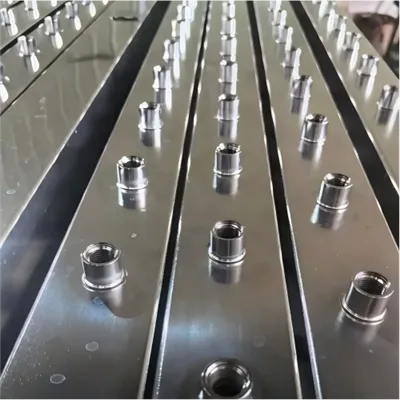
If you’re tired of dealing with warped straight stainless steel tubes that mess up your projects, we’ve got you covered. No cutting corners, no guesswork, just reliable, straight parts that fit right every time. Whether you need a small batch for a prototype or a large order for a big industrial project, hit us up to chat about your needs. We’re not just a supplier—we’re a partner in making your projects run smooth.
Smooth Condenser Tube References
ASM International. (2005). Stainless Steel: Processing, Fabrication, and Performance. ASM International.
International Organization for Standardization. (2017). ISO 1127: Stainless Steel Tubes, Dimensions and Tolerances. ISO.
Kalpakjian, S., & Schmid, S. R. (2019). Manufacturing Processes for Engineering Materials. Pearson.
China Super Tech Co., Ltd.
As one of the most professional straight stainless steel tube manufacturers and suppliers in China, we’re featured by quality products and good service. Please rest assured to wholesale OEM straight stainless steel tube from our factory. Also, custom service is available.
Address: Wangjing Science and Technology Park, Guangshun North Street, Chaoyang District, Beijing
E-mail: sales@316liquidcooling.com
WebSite: https://www.316liquidcooling.com/
