As an open type generator set supplier, I’ve spent countless cold mornings troubleshooting startup issues with customers in places where winter temperatures drop below freezing. There’s nothing more frustrating than a project grinding to a halt because your generator won’t fire up when you need it most—especially when that cold snap hits out of nowhere, leaving no time for delays. Over the years, I’ve seen it all: batteries dead from uncharged cold cranking amps, fuel lines clogged with gelled diesel, and operators skipping critical pre-start checks because they assume “it starts every other day.” This post breaks down the science behind cold-weather generator startup, step by step, so you can avoid common mistakes and get your open type unit running reliably when the temperature plummets. Open Type Generator Set
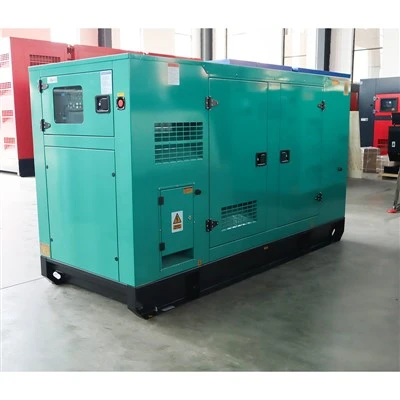
First, let’s talk about why cold weather is such a brutal test for open type generators. Most people don’t realize that generator systems aren’t designed for sub-32°F conditions straight out of the box. The biggest culprit is cranking power: a lead-acid battery’s output drops by roughly 20% at 32°F and up to 50% at 0°F, because the cold thickens the acid inside, slowing chemical reactions. That means a battery that works fine in 70°F might not have enough power to turn over an engine when the mercury drops. Then there’s fuel: diesel fuel, which is standard for most industrial open type units, forms wax crystals when temperatures fall below its cold filter plugging point (CFPP)—the temperature at which wax starts clogging fuel filters. For example, #2 diesel has a CFPP of around 20°F, so in a 5°F day, those crystals block fuel flow, leaving your engine starved. Gasoline generators face a different issue: cold air is denser, which can cause a rich fuel mixture when the engine first starts, leading to unburned fuel that floods the spark plugs. Open type units, unlike enclosed ones, don’t have the insulation or climate control to offset these issues, so proactive steps are non-negotiable.
Let’s start with the pre-start checks you should do the night before a cold event—procrastinating here is where most problems begin. First, test your battery’s cold cranking amps (CCA) with a digital load tester, not just a voltmeter. A voltmeter might show 12.2 volts, which sounds fine, but at 0°F, that same battery can’t deliver the 500+ CCA needed to crank most industrial open type engines. If your CCA is less than 75% of the manufacturer’s specification, replace it—don’t wait until cold weather to discover your battery is on its last legs. Next, check your fuel type. If you’re in an area where winter temps regularly drop below 20°F, switch from #2 diesel to #1 diesel, which has a lower CFPP (around -40°F) and is designed for cold climates. You can also use cold flow additives that lower the CFPP of #2 diesel by 10-15°F, but make sure to add them at least 24 hours before startup—adding them right before won’t give the wax crystals time to disperse. For gasoline units, use a fuel stabilizer rated for cold temperatures, and consider a fuel system dryer to prevent condensation in the tank, which can freeze and block lines.
Next, let’s walk through the actual startup sequence, which differs slightly from the standard warm-weather process. First, if your open type generator is equipped with a block heater (a common cold-weather accessory), plug it in at least two hours before startup. The block heater warms the engine’s coolant, which thickens oil is thinner? Wait, no—cold oil is much thicker, so warming the engine’s coolant and block reduces friction during cranking, cutting the battery’s load in half. If you don’t have a block heater, you can use a portable electric heater aimed at the oil pan, but be careful not to get too close to any electrical components on the open frame, which are exposed. Before hitting the start button, turn the fuel valve to the “on” position and wait 30 seconds for the fuel system to prime—open type units often have air in the lines that needs to bleed out. If your unit has a glow plug (standard for diesel engines), activate the glow plug for 10-15 seconds (count the seconds—don’t just hold it indefinitely) until the indicator light on the control panel turns off. Glow plugs heat the combustion chamber to 1,000°F+ to ignite cold fuel, and skipping this step is a top cause of cold starts failing.
Once you start cranking, don’t hold the starter motor for more than 10 seconds. If the engine doesn’t fire, wait 30 seconds to let the starter cool down—cranking for longer than 10 seconds can overheat the starter, which is even more of a problem in cold weather, when metal expands and contracts, risking seized components. If it fails to start after two attempts, check the spark plugs (for gas units) or the glow plugs (for diesel) to make sure they’re not fouled. Open type generators are exposed to dirt, so spark plugs can get coated with unburned fuel in cold weather, so pull one and clean it with a wire brush if needed. For diesel units, a clogged fuel filter is another common issue—check the fuel pressure gauge on the control panel; if it’s below 10 psi, you might need to replace the filter before trying again.
After the engine starts, don’t immediately put it under full load. In cold weather, the engine’s oil is still thick, and the cooling system isn’t at operating temperature, so running at 100% load can cause excessive wear on bearings and pistons. Instead, let it idle for 5-10 minutes, watching the exhaust temperature gauge—once it stays steady at 180°F+, you can gradually add load, starting with 50% for five minutes, then moving to full load. If you notice white exhaust smoke after startup, that’s normal for cold engines—it’s unburned fuel vapor, which will clear up as the engine warms up. If the smoke turns black or the engine sputters at idle, that’s a sign of a rich fuel mixture, which you can fix by slightly leaning the fuel-air ratio (check your control panel manual for adjustments, since open type units vary by model).
Now, let’s cover common mistakes that even experienced operators make with open type generators. First, assuming that weekly run-time is enough—cold weather requires monthly load tests, not just starting the unit and letting it idle for five minutes. Idling doesn’t heat the engine properly, and it doesn’t keep the fuel system from gelling. Another mistake is using a trickle charger that’s too weak for cold weather: a standard trickle charger might keep a battery charged in 60°F, but in 0°F, it needs a charger rated for low temperatures that can deliver enough current to counteract the acid thickening. If your open type generator is stored outside, make sure the air intake isn’t blocked by snow or ice—open frames have exposed intake grilles, and snow can pack in there overnight, cutting off air flow and causing the engine to stall.
As a supplier, I also recommend adding simple cold-weather accessories to your open type generator to reduce startup stress. A battery blanket, which wraps around the battery and keeps it at 60°F+ with a 12-volt heater, is one of the most cost-effective upgrades. A fuel water separator with a heater prevents condensation from freezing in the lines, and an engine oil heater that clamps to the oil pan keeps the oil thin enough for easy cranking. I’ve seen customers skip these and end up paying hundreds of dollars in emergency service calls, so investing $500-$1,000 in accessories can save thousands in downtime.
Let’s also talk about troubleshooting if your generator still won’t start after following these steps. If the starter is clicking but not turning over, that’s almost always a weak battery—test the CCA again, or jump it with a spare battery, but make sure the spare is also rated for cold weather. If the starter is turning over slowly but the engine won’t fire, check for fuel flow: loosen the fuel line at the injector and turn the engine over—if no fuel comes out, your filter is clogged or the fuel pump is frozen. If the engine fires but stalls immediately, that’s a sign of a stuck choke (for gas units) or a failed glow plug—replace the glow plug and try again. For open type units, since all components are exposed, it’s easy to miss a frozen sensor wire, so visually inspect all wires for ice buildup if you’re having repeated issues.
Finally, let’s cover post-startup best practices for cold weather. After running the generator at full load for at least 30 minutes (to get all components to operating temperature), turn it off and do a quick check of the coolant level—cold weather can cause minor leaks in open frame units that you didn’t notice when it was warm. If you’re storing the generator for an extended cold snap, drain the fuel from the lines and add a fuel stabilizer, and disconnect the battery to prevent it from discharging overnight. Open type generators, while durable, are exposed to the elements, so taking these small steps will extend their lifespan and ensure they’re ready when you need them.
If you’re planning for an upcoming cold weather event and want to test your open type generator’s readiness, or if you’re looking to upgrade your unit with cold-weather accessories, our team is here to help. We work with industrial, commercial, and residential customers to customize open type generator setups for extreme temperatures, and we offer pre-start cold-weather checks to make sure your unit will perform when it matters most. Whether you need a quick battery replacement, a cold flow additive recommendation, or a full system tune-up, we can walk you through every step to avoid costly downtime. Don’t wait until the first frost hits—contact our team to schedule a consultation or get answers to any questions about cold-weather generator startup and maintenance.
Generator Sets Classified by Engine Brands References:
- Engine Cold Weather Starting Procedures, International Organization for Standardization (ISO) 8528-5:2013
- Cold Filter Plugging Point for Middle Distillate Fuels, ASTM D6371-21
- Lead-Acid Battery Performance in Low Temperatures, Battery University, 2022
- Diesel Fuel Gelling and Cold Weather Solutions, National Renewable Energy Laboratory (NREL) Report, 2021
Taizhou Jinte Electromechanical Technology Co., Ltd.
We are one of the most professional open type generator set manufacturers and suppliers in China. With abundant experience, we offer a wide range of generators with superior quality. Please rest assured to buy advanced open type generator set for sale here from our factory. Customized orders are welcome.
Address: Room 207-214, Eurasia International Garden Commercial Center, Hailing District, Taizhou City
E-mail: Sales@generatorschina.com
WebSite: https://www.jintepower.com/
