If you’ve ever sat on a subway, watched a high-speed train zoom past, or waited for a commuter rail to pull into the station, you’ve probably never thought about the hum that keeps it moving. That low, steady drone isn’t just train noise—it’s the sound of power conversion transformers doing their job, often in tight, high-stakes spaces where a single glitch can delay hundreds of passengers. As someone who’s spent the last 12 years supplying these parts, I’ve gotten used to explaining them like they’re the unsung heroes of rail transit, not just another box in a train’s electrical closet. Let me break down how they work, why they matter so much, and why picking the right one isn’t just a choice—it’s a make-or-break call for rail operators. Power Conversion Transformers
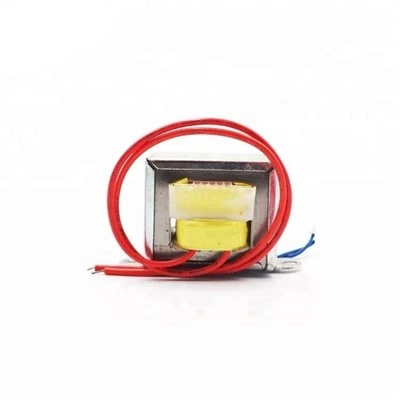
First, let’s start with the basics that don’t get talked about a lot. Traction systems run on two totally different kinds of power, and they don’t play nice together. The grid that feeds power to subway tracks or overhead lines is AC, or alternating current—its voltage flips direction back and forth, usually at 50 or 60 Hz depending where you are. But the electric motors that pull trains, and all the fancy controls that keep them smooth and safe? Most of them need DC, or direct current, which stays steady in one direction. That’s where power conversion transformers come in: they’re the middleman that bridges that gap, and they don’t just switch between AC and DC—they adjust voltage too, because overhead lines blast power at way higher voltages (like 25,000 volts for many commuter trains) than the motors can handle (which are often a few hundred volts, max).
Wait, let’s clear up a common mix-up: traction transformers aren’t the same as the big transformers you see on utility poles. Those are for stepping voltage up or down for homes and offices, but they don’t have to handle the rapid, variable loads trains throw at them. A subway train that’s pulling away from a stop needs way more power than one cruising at full speed, and they can even reverse power when braking. Our transformers have to adapt to that back-and-forth without overheating or wearing out fast—something your neighborhood transformer never has to deal with.
Here’s how the process works, step by step, like I’d explain it to a new installer on our team. First, AC power comes into the transformer from the overhead line or the third rail at whatever line voltage the system uses. Inside the transformer, there are two coils of wire wrapped around an iron core—one called the primary coil, the other the secondary. The number of wraps around each coil is what changes the voltage. If the secondary coil has fewer wraps than the primary, voltage drops; more wraps, voltage goes up. For traction, we almost always drop it down to a level the motor and controls can use safely.
But wait—all that still leaves AC, right? So then comes the conversion part. Modern traction transformers don’t just do voltage change; most have built-in rectifiers, usually diodes or thyristors, that turn AC into DC. Back in the old days, rail transformers had separate rectifier boxes, but now we integrate them right into the unit to cut down on space—super important because train bays are cramped, every inch counts. The rectifiers flip the AC’s direction only one way, turning that wavy AC into the steady DC the motor needs to spin.
But that’s not all—today’s high-speed trains and light rail systems need even more. They have variable frequency drives (VFDs) that adjust how fast the motor spins to match how fast the train is going. Our transformers work with those VFDs, not against them, so the power is clean, no spikes or dips that could fry the motor. I learned this the hard way early on: a customer once tried to skimp on a cheaper transformer for their light rail line, and within six months, three motors burned out because the power was too “noisy” for their VFDs. That’s when I realized this isn’t just about specs—it’s about reliability.
Another big part I don’t see people talk about enough is isolation. The grid’s power has a lot of ground faults and surges, and if that gets into the train’s sensitive electronics—like the door controls, the brakes, or the passenger info screens—you’ve got a safety hazard. Our transformers separate the train’s internal electrical system from the grid completely, so those surges never make it inside. That’s non-negotiable, especially for urban transit where thousands of people are on board. We test every transformer we ship with surge testers that mimic 10,000-volt spikes, and if it doesn’t hold up, we send it back—no exceptions.
Now, why does this matter for the people using these systems? A train can’t move at all without a working traction transformer. If one fails, that train is stuck, disrupting schedules, stranding passengers, and costing operators thousands in delays. Last year, a commuter line in the Northeast U.S. had a transformer fail on three trains in one month because they used units that weren’t rated for the cold winters there. Our transformers are built with thermally insulated casings that handle temperatures from -40°F up to 120°F, and we use higher-grade copper coils instead of aluminum, which doesn’t conduct heat as well. That’s the kind of detail that makes the difference between a 10-minute fix and a three-day outage.
Let’s also touch on the different types of transformers we supply, because one size definitely doesn’t fit all. For subways, which run on 750V DC third rails, we have compact, low-profile transformers that fit under the car floor—no extra space. For high-speed rail (like Europe’s TGV or Japan’s Shinkansen), we have liquid-cooled transformers, because high-speed trains pull way more power for their motors, and air cooling isn’t enough to keep temps down. For light rail, which often switches between AC and DC lines in the same system, we have dual-voltage transformers that adapt on the fly—no need to swap parts when the train moves between lines.
I know a lot of people out there might think, “Transformer is transformer, right?” But no—traction systems have totally different demands than anything else. They’re constantly vibrating, they’re exposed to dust and humidity, they’re in use 24/7 in many cities, and they have to handle rapid load changes. A utility transformer might last 30 years, but a traction transformer needs to last at least 20, and often more, because you can’t swap them out every few years like a home appliance. That’s why we use premium materials: high-grade silicon steel cores that cut down on energy waste, thermal epoxy that seals out moisture, and corrosion-resistant casings for outdoor rail lines.
Another thing I get asked a lot: why do some transformers hum so loud, and ours don’t? That’s called magnetostriction, and it’s when the iron core expands and contracts as AC power passes through it. Cheaper transformers use low-grade steel, which vibrates more and makes that annoying hum. Our transformers use grain-oriented silicon steel, which minimizes that vibration, so they run quieter—way better for passengers and for maintenance teams who work near the train all day. We did a side-by-side test once: a competitor’s transformer was 68 decibels at idle, ours was 52—like going from a busy conversation to a quiet office. That’s not a selling point for most suppliers, but it’s huge for the people who ride these trains every day.
Now, let’s talk about the mistakes I see operators make when choosing a transformer. First, going for the cheapest unit. I get it, budgets are tight, but cutting corners here always costs more later. We’ve had customers who bought cheap transformers, spent a little less upfront, but ended up replacing three motors and the entire transformer within two years—costing way more than if they’d bought ours. Second, not considering the operating environment. A transformer that works great in Phoenix, where it’s dry and hot, will fail fast in Seattle, where it’s rainy and damp. We customize every unit we supply to the exact conditions of the line it’s going on, from temperature ratings to moisture sealing. Third, ignoring future needs. If an operator is planning to expand their line or add higher-speed trains in five years, we can build a transformer that’s scalable, so they don’t have to replace it when they upgrade. That’s the kind of long-term thinking we bring to the table.
For anyone in the rail industry reading this—whether you’re a maintenance manager, a fleet director, or someone who just deals with day-to-day operations—you know that reliability is non-negotiable. A train that’s late isn’t just an inconvenience; it’s a drain on commuters, a hit to a city’s productivity, and a safety risk if delays lead to overcrowding. That’s why we don’t just sell transformers—we partner with our customers to make sure their transformers fit their exact needs, have the right specs, and are supported with fast, responsive service when something does come up. We stock all the parts for the transformers we supply, so if you need a replacement coil or a diode, we can ship it overnight, no waiting around for custom parts.
If you’re currently dealing with a transformer that’s acting up, or planning to upgrade your fleet, we can help. We’ll walk through your line’s specs, your environment, and your long-term goals, and suggest the right transformer without pushing something you don’t need. No fine print, no hidden fees, just honest advice from people who’ve been in the rail industry as long as we have. We’re not just a supplier—we’re the people you call when you need to keep your trains moving, your passengers on schedule, and your operations running smoothly.
If you’re ready to talk through your needs, just reach out. We can send over a free, no-obligation quote, answer any questions you have about specs, installation, or maintenance, and even set up a demo of one of our transformers if you want to see how it works in person. The last thing we want is for you to be stuck with a transformer that doesn’t work for your line.
Drum Core Inductors References
- "Traction Power Transformers: Design and Application for Rail Systems" by IEEE Rail Transportation Committee, 2021
- "Railway Electrical Systems: Power Conversion and Distribution" by John Wiley & Sons, 2019
- "Transformer Reliability in Dynamic Rail Environments" by International Union of Railways (UIC), 2020
- "Low-Voltage Rectifier Transformers for Urban Transit Systems" by Electric Railway Journal, 2022
- "Magnetostriction in Traction Transformer Cores" by Institute of Electrical Engineers (IET), 2018
Shenzhen Haoyanlin Electronics Co., Ltd.
With abundant experience, we are one of the most professional power conversion transformers manufacturers and suppliers in China. Please feel free to buy advanced power conversion transformers made in China here from our factory. All custom made products are with high quality and competitive price.
Address: Room A306, Building A, Hongwan Business Center, No.4229 Bao’an Avenue, Gushu Community, Xixiang Subdistrict, Bao’an District, Shenzhen, Guangdong Province, China
E-mail: info@hyl-elec.com
WebSite: https://www.hyl-elec.com/
