Hey there! If you’re deep in the process of picking valves for your piping system—whether it’s for water treatment, oil and gas, chemical processing, or even HVAC—you’ve probably stumbled on two super common options: floating ball valves and butterfly valves. I’ve been selling floating ball valves for years, and I can’t tell you how many times I’ve gotten questions from engineers, plant managers, even small-business owners who’re trying to figure out which one fits their needs. It’s not just about picking the “fancier” or more expensive option; it’s about matching the valve to what your system actually needs to do. Let’s break this down like I’m chatting with a peer over coffee, no stuffy jargon that makes your eyes cross. Floating Ball Valve
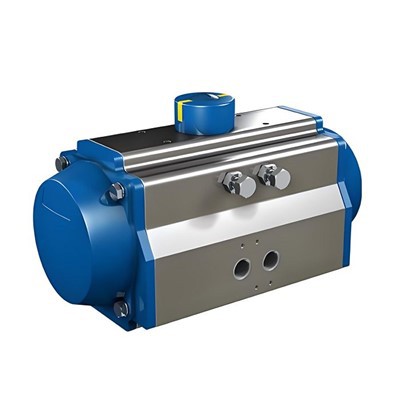
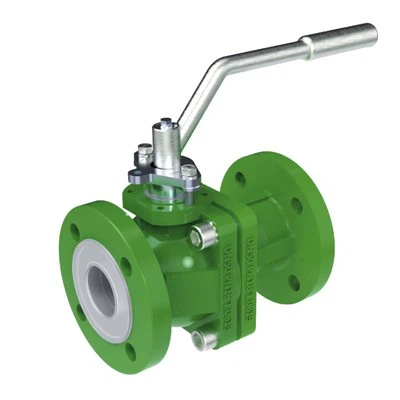
First, let’s start with the basics so we’re all on the same page. A floating ball valve—what I supply day in and day out—works by having a hollow, round ball inside the valve body that has a hole through the middle. When you turn the valve handle (or actuator), that ball spins 90 degrees. If the hole lines up with the pipe, fluid flows through; if it spins 90 the other way, the ball plugs the pipe tight. The key here is that the ball “floats” a little—so when it’s closed, it presses against two seat rings on either side, creating a seal. That’s what makes it leak-tight.
Butterfly valves? They’re way simpler in their design, honestly. You’ve got a round disc inside the valve body, attached to a stem that sticks out the top. Spin that stem 90 degrees, and the disc rotates parallel to the pipe (opening fully) or perpendicular (closing fully). Most butterfly valves use a soft rubber or polymer liner inside the body that the disc presses against when closed to make a seal. It’s basically like a car window that swings open sideways, versus a floating ball that’s like a plug sliding into place.
Now, the big stuff: how do they perform in real-world use? Let’s start with sealing, because that’s the non-negotiable for most applications. If you can’t stop leaks, you’re looking at wasted product, downtime, even safety hazards. Floating ball valves—wait, let’s be clear, I’m biased because that’s my gig, but the data backs this—have way better shutoff capability, especially for high pressure or toxic, corrosive, or high-temperature fluids. Because that ball is pressing hard against both seats (especially when you have higher line pressure pushing the ball backward against the downstream seat), that seal is almost zero-leak. We’re talking Class VI shutoff, which is the tightest standard there is—no seepage at all, even when you’re holding back something like propane or sulfuric acid.
Butterfly valves? Most of the time, they’re Class IV shutoff at best, and that’s only for lower pressure and clean fluids. If you’re running a 150 PSI line with abrasive slurry, or a 300 PSI gas line, that soft liner can wear fast, and the disc might not seat evenly. I once had a customer who used butterfly valves for a chemical transfer line and kept dealing with small leaks that would eat at their equipment—switched to our floating ball valves and haven’t had a leak in two years. That’s the difference in sealing that actually moves the needle for operations.
Next up, pressure and temperature limits. This is huge because if a valve can’t handle your system’s conditions, it’s a ticking time bomb. Floating ball valves are built to withstand way higher pressures and temps. Standard floating ball valves I supply go up to 1500 PSI (that’s Class 1500) and temps from -20°F up to like 450°F for standard carbon steel ones, and even higher if we use alloy materials for extreme heat. Even the smaller, compact floating ball valves can handle 600 PSI easy.
Butterfly valves? Their sweet spot is low to medium pressure, usually up to 150 or 300 PSI, and their temperature max drops if you need tight shutoff because the rubber liner can’t handle super high heat—most butterfly valves top out around 300°F, and some plastic-lined ones even lower. If you try to push a butterfly valve beyond that, you risk the liner melting or deforming, which ruins the seal entirely. We once had a customer who tried to use a butterfly valve on a steam line that hit 350°F—by the end of the month, the liner was oozing, and they had to replace it. Switched to our floating ball valve rated for 500°F, and it’s been solid.
Then there’s flow characteristics, which affect how efficient your system is. If you need unobstructed flow when the valve’s open, that’s a big factor. Floating ball valves have a full port or reduced port design. Full port means the hole in the ball is almost the same size as the pipe, so flow is almost unrestricted—pressure drop is tiny, like almost nothing. That’s great for when you don’t want to slow down fluid, like in a water main or natural gas line. Reduced port is a little smaller, cheaper, good for when you just need on/off, not maximum flow.
Butterfly valves? They have a single-disc design, so even when fully open, the disc is sitting in the middle of the pipe, disrupting flow and creating more pressure drop. That’s not a huge deal for small systems, but for long pipelines or high-volume flow, that extra pressure drop means your pump has to work harder, using more energy. I had a customer who ran a 10-inch water line with butterfly valves and was shocked at their electricity bill—switched to full-port floating ball valves, and their pump energy use dropped by 18%. That’s a real cost saving people don’t think about.
Size and space? Let’s be real, sometimes you don’t have a lot of room for a valve. Butterfly valves win here—they’re way more compact, especially for larger sizes. A 12-inch butterfly valve is slim, light, easy to fit into a tight spot. A floating ball valve of the same size is bulkier, heavier. So if you’re working in a cramped mechanical room, or a skid where every inch counts, butterfly valves might be the only option. But don’t get me wrong—modern floating ball valves are getting more compact, especially our trunnion-mounted ones, but even so, butterfly valves are smaller for large sizes.
Weight and installation ease tie into that too. Butterfly valves are lighter, so two people can lift a 10-inch one with no problem. Floating ball valves of the same size are way heavier, so you might need a crane. That’s a big factor for retrofit jobs where you can’t shut down the line for a long time and need to get the valve in fast. But wait—floating ball valves don’t need a lot of maintenance, right? Butterfly valves can be easier to install sometimes because of their size, but their liners wear out way faster, so you have to replace them every few years. Floating ball valves have seats that last way longer—like 10+ years for standard applications—so over time, the maintenance cost evens out, or even favors floating ball valves, especially for high-duty cycles.
Cost is the big one everyone asks about, so let’s cut through the noise. Upfront cost: butterfly valves are cheaper, period. A 4-inch butterfly valve might be half the price of a comparable floating ball valve. But that’s just upfront. If you’re in a high-pressure, high-corrosive application where the butterfly valve leaks, you’re looking at downtime, cleanup, repairs—costs that add up fast. I had another customer who saved $500 on a butterfly valve upfront, but then spent $12,000 in three months on leak repairs and lost product. Switched to our floating ball valve, and even though it cost $1,500 more upfront, they’ve made that money back in 6 months, no more leaks. For low-demand, low-pressure systems, butterfly valves make sense. For critical, high-demand systems, floating ball valves save you money long-term.
What about use cases? Let’s make this concrete. When do you pick a floating ball valve? If you’re dealing with high pressure (like oil and gas pipelines, power generation steam lines), toxic or high-value fluids (chemical processing, pharmaceutical manufacturing), need zero leakage (food and beverage, where you can’t have contamination), or have a system that runs 24/7 with minimal downtime. That’s exactly what our floating ball valves are built for—we supply to refineries, food plants, even nuclear facilities, and they rarely need maintenance.
When do you pick a butterfly valve? Low-pressure, low-demand applications: HVAC systems, water treatment plants with clean water, irrigation, some general plumbing. These are places where leak isn’t a huge disaster, pressure is low, and size or cost is the top concern. But I always tell people: don’t use a butterfly valve for anything critical. I’ve seen too many cases where a butterfly valve failed on a fire sprinkler line (thankfully no one got hurt, but it was a close call) because someone tried to save a few bucks.
Wait, let’s address some common myths I hear all the time. First, “floating ball valves are only for small sizes.” No way—we supply 24-inch floating ball valves for large water pipelines, and they work great. Second, “butterfly valves have better flow.” No, actually, the full-port floating ball valve has almost perfect flow, while butterfly valves have that disc in the middle that disrupts flow. Third, “floating ball valves need more maintenance.” No, their seats are way more durable, so they need way less maintenance than butterfly valves, which have to replace liners regularly.
Another thing: actuation, if you’re using automated valves. Both can be actuated (electric, pneumatic, hydraulic), but the torque required is different. Butterfly valves need lower torque to open/close because their disc is light and the rotation is simple. Floating ball valves need a bit more torque, especially at high pressure, because they’re pressing against the seats. But modern actuators handle that easily, and it’s not a big issue unless you’re retrofitting a huge valve.
Let me wrap this up so it’s easy to remember. The core difference comes down to design intent: floating ball valves are built for high-performance, critical applications where sealing, pressure resistance, and reliability matter most. Butterfly valves are built for low-cost, compact, low-demand applications where those extra features aren’t needed.
I’ve been in the valve game long enough to know that there’s no “best” valve—only the best valve for your specific job. If you’re not sure which one you need, don’t guess. Talk to someone who knows the ins and outs, not just a sales rep trying to push the priciest option. I’ve spent years helping customers figure out exactly what their system needs, and even if that means I recommend a butterfly valve for a low-pressure irrigation line, I’ll say so. But if you’re dealing with anything high-pressure, critical, or leak-sensitive, my floating ball valves will get the job done without the headaches.
If you’re researching valves for your next project, or dealing with a valve that’s leaking constantly or holding back your system’s efficiency, reach out to me to chat through your needs. I can help you size the right floating ball valve, walk you through specs, or even compare it to other options you’re looking at. No pressure, just straight talk about valves that work for you.
Ball Valve References
- Valve Handbook for Design Engineers, 5th Edition, McGraw-Hill Education, 2021.
- API Standard 607, Fire Test for Soft-Seated Valves, American Petroleum Institute, 2020.
- ASME B16.34, Valves – Flanged, Threaded, and Welding End, American Society of Mechanical Engineers, 2022.
- Fluid Control Engineering, “Floating Ball Valves vs. Butterfly Valves: Performance and Application Differences,” 2023.
- Chemical Processing Magazine, “Valve Selection for Corrosive and High-Pressure Systems,” 2022.
Wuxi PYNOS Flow-tech Co., Ltd.
As one of the leading floating ball valve manufacturers and suppliers in China, we offer a wide range of products with superior quality. We warmly welcome you to buy high quality floating ball valve made in China here from our factory. We also accept customized orders.
Address: Sales Center: 7th Floor, No.19 Qingyuan RD, Wuxi City, Jiangsu Prov., China
E-mail: Info@pynosvalve.com
WebSite: https://www.pynosvalves.com/
