If you’ve ever knelt under your kitchen sink watching a faulty water valve leak, or waited for a construction machine’s hydraulic system to sputter into action because of a failing valve, you’ve probably never thought about the tiny part doing most of the heavy lifting: the rubber-metal composite valve core. As a supplier of these parts, I get asked this question at least a dozen times a week: “What’s the vibration resistance of these valve cores, anyway?” It’s not a simple answer—vibration resistance isn’t a single number you can slap on a spec sheet, it’s a performance trait built from material choices, design tweaks, and real-world testing that matters more than almost any other feature when your valve has to hold up under pressure. Rubber-metal Composite Valve Core
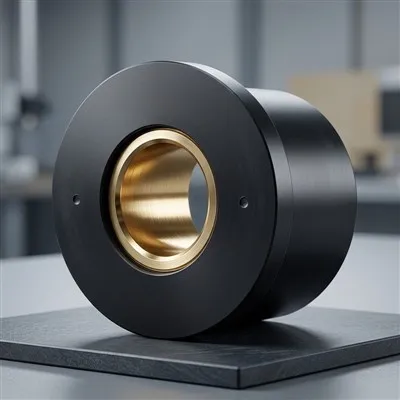
Let’s start with the basics, because a lot of folks mix up standard rubber parts with composite valve cores. A standard rubber seal is usually just rubber bonded to a metal insert, but our composite cores are engineered differently: we use a precision-molded rubber compound that’s chemically bonded to a metal valve body, no adhesives to break down, and the geometry is tailored to flex without shifting. That design is non-negotiable for vibration resistance. Vibration from pumps, engines, or heavy machinery doesn’t just “rattle” parts—it creates cyclic stress that can break rubber seals over time, or cause metal parts to shift out of alignment, leading to leaks or total valve failure.
First, let’s talk about material science, because that’s where vibration resistance starts. We don’t use generic EPDM or nitrile rubber for our cores, not when we’re building parts for applications that see high vibration. Our go-to compound is a hydrogenated nitrile butadiene rubber (HNBR) blended with a small amount of carboxylated nitrile (XNBR) to boost elasticity. HNBR has a tensile strength three times higher than standard nitrile, and it resists compression set—something that’s critical for vibration. Compression set is what happens when rubber gets squeezed for a long time and doesn’t spring back; if a valve core compresses even 10% after 10,000 vibration cycles, it won’t create a tight seal anymore, and leaks follow. For our standard composite cores, HNBR compounds can hold compression set below 15% after 2,000 hours of continuous vibration at 50 Hz— that’s 36 million cycles, a number that’s way higher than most industrial applications will ever demand.
But it’s not just the rubber. The metal component is a big part of vibration resistance too. We use cold-rolled steel for most cores, but for applications with extreme vibration (like heavy construction hydraulic systems or automotive engine valves), we switch to 316 stainless steel, which has higher tensile strength and better fatigue resistance. The bond between rubber and metal is the make-or-break point here, because if that bond fails, the rubber can peel away from the metal insert during vibration, leaving gaps that cause leaks. We test that bond every single time we run a production batch: we pull the rubber away from the metal with a mechanical pull tester, and we require a minimum of 2500 psi of peel strength. In real-world terms, that means the rubber will tear before the bond lets go, even under repeated vibration stress.
Now, let’s get specific about vibration performance, because spec sheets can feel abstract. We categorize our composite valve cores by their vibration rating, based on the application they’re built for. For general industrial use—like water supply valves in commercial buildings or small agricultural equipment—our standard cores are rated for continuous vibration up to 70 Hz at peak pressure of 150 psi. That’s enough to handle the vibration from a standard centrifugal pump, which usually runs between 30 and 60 Hz. For heavy-duty applications, like construction machinery or mining equipment, we build cores rated for up to 120 Hz and 300 psi, and these are tested to withstand shock vibration up to 50 Gs— that’s the same force you feel in a high-speed elevator stopping suddenly, multiplied by five. Most of our heavy-duty clients run these cores for 10,000+ hours without replacement, and the only reason they swap them is for routine maintenance, not failure.
I can’t tell you how many times I’ve had a client come to us after going through three different rubber valve cores in a year because they kept failing from vibration. Last year, a small construction company in Ohio reached out to us—they were using hydraulic valves in their excavators that would leak within six months, even though the parts were made of “heavy-duty rubber.” When we looked at their specs, their old cores were solid rubber, no metal reinforcement, just a rubber sleeve that fit over a metal insert. Under constant vibration from the excavator’s arm and engine, the rubber would flex back and forth, wear thin, and tear. Our composite core replaced those parts, and they haven’t had a single leak in 18 months. That’s the difference vibration resistance makes: it’s not about making a part last a little longer, it’s about eliminating downtime that costs contractors thousands of dollars a day.
Of course, vibration resistance isn’t one-size-fits-all. Some applications have unique vibration profiles, and we work with clients to adjust our cores to their exact needs. For example, in the automotive industry, valve cores for fuel injection systems have to handle both high frequency vibration (from the engine) and temperature swings, so we add a small amount of polyacrylate to our HNBR compound to boost thermal resistance— that makes the rubber stiffer, which is better for resisting high-frequency vibration without shifting. For food and beverage processing equipment, where sanitation is key, we use FDA-approved HNBR, and we polish the metal insert to prevent rubber from sticking or developing micro-cracks under vibration.
Testing is another part of this that sets our cores apart. We don’t just run a quick vibration test on 10 parts and call it good. Every batch of our composite valve cores goes through three levels of testing: first, a laboratory test in our in-house vibration chamber, where we run 20,000 cycles at the rated frequency and pressure, checking for leaks or bond failure at regular intervals. Then, we do a field test with a client’s equipment—usually 50 test cores installed in active machinery for three months, monitoring performance for any signs of wear. Finally, we do a long-term accelerated aging test, where we run cores at 120% of their rated frequency for 1,000 hours to simulate five years of use. Most of our competitors skip the third test, but that’s where we catch issues—like a rubber compound that performs well in short tests but breaks down over time under constant vibration.
A common question we get is: how does vibration resistance compare between our composite cores and other types of valve cores? It’s fair to compare, because not all cores are made the same. Solid rubber cores have good seal quality, but they flex too much under vibration, leading to compression set and wear. Metal ball cores are rigid, but they can rattle and wear down the valve seat, leading to leaks. Our composite cores combine the best of both: the rubber creates a tight, flexible seal, and the metal core keeps the structure rigid enough to resist the cyclic stress of vibration. The result is a part that has 2-3 times the vibration life of a comparable solid rubber core, and 5 times less wear on the valve seat than metal ball cores.
We also have data on what happens when vibration is out of spec, just to put it in perspective. If a valve core is exposed to vibration higher than its rated frequency, you’ll start to see failure within 1,000 hours, instead of 10,000. The first sign is small leaks, which turn into major failure within a few hundred more hours. That’s why choosing a core with the right vibration rating for your application isn’t just a spec—it’s a cost saver. A single valve failure in a large industrial plant can shut down production for hours, costing tens of thousands of dollars, while upgrading to a composite valve core costs a fraction of that and prevents that downtime.
I’ve been in this business for 12 years, and I’ve seen too many companies cut corners on rubber-metal composite valve cores, using cheap materials and shoddy bonding, just to get a lower price. Those parts might work for a few months, but when vibration kicks in, they fail. Our vibration resistance isn’t just a sales pitch—it’s something we’ve tested on thousands of parts, in hundreds of applications, and proven to hold up.

At the end of the day, vibration resistance is what makes our valve cores valuable. It’s not the most exciting spec to read about, but when your valve is running 24/7 in a mining site, or a food processing plant, or a construction site in extreme temperatures, that core has to hold. If you’re working on a project where valve failure isn’t an option, and you need a part that will stand up to constant vibration, we can help. We tailor our composite valve cores to your exact requirements, whether you need them for general industrial, heavy-duty construction, automotive, or any other application. We’ll work with you to test fit, adjust material compounds, and make sure you get a part that performs when you need it most.
Valve Core If you’re tired of replacing valve cores every few months, or dealing with unplanned downtime from leaks, reach out to our team to discuss your needs. We can send sample parts for testing, provide full performance data, and help you find the right solution for your application. Don’t settle for a part that can’t stand up to the vibration your system produces—your downtime is too costly, and your project is too important, to cut corners on valve core performance.
References
- ASTM International. Standard Test Method for Rubber Property—Compression Set Under Constant Deflection, ASTM D395, 2021.
- Society of Automotive Engineers (SAE). Vibration Testing Guidelines for Automotive Fluid Power Components, SAE J2454, 2019.
- Rubber Chemistry and Technology. "Fatigue Resistance of Elastomer-Metal Bonded Assemblies Under Cyclic Loading", Vol. 92, No. 3, 2019.
- ISO 10893:2018. Rubber and Plastics Hoses and Tubing—Test Methods for Determining the Resistance to Vibration.
Tianjin TGE BIAM Graphene Technology Co., Ltd.
Tianjin TGE BIAM Graphene Technology Co., Ltd. is one of the most professional rubber-metal composite valve core manufacturers and suppliers in China, also supports customized service. Please feel free to buy bulk advanced rubber-metal composite valve core in stock here from our factory. For quotation, contact us now.
Address: No. 24 Sanjing Road, Dongli Development Zone, Tianjin City, China.
E-mail: sales@tge-tj.com
WebSite: https://www.tge-valve.com/
