If you’ve been around AI infrastructure for any length of time, you’ve probably heard the same constant complaint: GPUs, the workhorses of large language models, computer vision, and generative AI, run so hot their thermal limits become a serious bottleneck. Left unmanaged, that heat doesn’t just slow training—it can shorten hardware lifespans, throw training runs off, or even crash entire clusters mid-workload. That’s where liquid cooling steps in, and dielectric fluid is the unsung hero making it all work. AI Data Liquid-Cooling

Let’s break this down without the jargon, because I’m the guy who works with this stuff every day at an AI data liquid-cooling supplier, and I get that most people don’t care about the science unless it solves their problem. First, what even is dielectric fluid? In the simplest terms, it’s a non-conductive liquid that transfers heat away from overheating components—think GPUs, servers, and even data center racks—without carrying electrical current. That’s the key difference between regular water cooling (which uses conductive water and needs fancy, expensive insulation) and liquid cooling for AI: dielectric fluid lets you submerge entire servers, fully pump it through racks, or run it over hot components without risking a short circuit if something springs a leak.
You might be wondering, why not just use plain old water for cooling? Water is cheap and has great heat transfer, but it’s incredibly conductive—if it touches a live GPU or server circuit, you’re looking at a fried piece of hardware, maybe even a fire. Dielectric fluid eliminates that risk entirely. It’s engineered to have almost no free ions, so electricity can’t flow through it. That’s why it’s the go-to for immersion cooling, which is one of the most efficient liquid cooling setups for AI workloads right now.
Now, not all dielectric fluids are created equal, and that’s where a lot of people get tripped up. The two main categories you’ll hear about are mineral oil and synthetic dielectric fluids, right? Mineral oil is cheap, has been around for decades, and works fine for small test setups. But here’s the thing for AI clusters: it’s slow to transfer heat, can get gummy over time, traps contaminants, and is actually a pain to dispose of when it’s spent. For high-density AI clusters, where you’re packing dozens of GPUs into a single rack generating thousands of watts of heat, mineral oil just doesn’t cut it anymore. That’s why we focus on synthetic dielectric fluids—they’re formulated specifically for data center and AI cooling, with higher thermal conductivity, lower viscosity (so they pump easier, less energy wasted moving them), longer lifespans, and no gunk buildup.
Let’s talk about why this matters so much for AI, specifically. Training a 7B parameter LLM can put a single GPU through 350 watts of heat, and clusters often have 8 or more GPUs per server, plus CPUs, memory modules, and PCIe cards adding to the load. Air cooling, the old standard for servers, maxes out at around 250 watts per GPU before you need enormous fans, which not only use a ton of electricity but also generate so much noise that data centers have to spend more money on sound dampening. Liquid cooling with dielectric fluid can pull heat away at 500+ watts per GPU, and that’s just the start—some of our clients are running setups that handle 1,000 watts per GPU without breaking a sweat.
There’s another huge win here: PUE, or Power Usage Effectiveness. That’s the ratio of power a data center uses for its hardware versus power it uses for cooling. Traditional air-cooled data centers have a PUE of around 1.5 to 1.7, meaning 30-50% of their power goes to keeping equipment cool. Our liquid cooling setups using dielectric fluid get PUE as low as 1.05, which is a game-changer for AI operators who are already facing sky-high electricity bills just to run their clusters. When you’re spending $10k a month on power for a single AI cluster, cutting cooling costs by 60% isn’t just a nice extra—it’s make-or-break for profitability.
Wait, but let’s address the elephant in the room: people used to think liquid cooling was only for super niche, fancy setups, or that it was too hard to implement. That’s not true anymore. When we work with clients, we don’t just drop off a drum of fluid and leave—we tailor it to their existing infrastructure. Some clients use two-phase immersion cooling, where the fluid boils at a low temperature (around 50°C) and turns to vapor that gets cooled back into liquid, transferring even more heat without using extra pumps. Others use single-phase, where the fluid stays liquid the whole time, pumped through a closed loop that runs over the GPUs and servers. Both work with dielectric fluid, and we adjust the formula based on the client’s rack size, workload density, and even their existing space constraints.
I’ve seen too many AI companies skip dielectric fluid because they think it’s expensive, but here’s the math that no one tells you: replacing a $10k GPU that overheats because of bad cooling costs way more than investing in quality dielectric fluid. Plus, our synthetic fluids last 5+ years, compared to mineral oil which needs to be changed every 2-3, so the total cost of ownership is actually lower long-term. And because they’re non-conductive, you don’t have to shut down entire racks for maintenance if there’s a small leak—you just fix the issue, top off the fluid, and keep running. That’s massive for AI workloads where downtime can cost $100k+ an hour.
Let’s get specific about how dielectric fluid works in a real cluster. Take a client who’s training a generative AI model for customer service chatbots. They have 10 racks, each with 8 servers, each with 8 A100 GPUs—total of 640 GPUs generating ~224,000 watts of heat. If they used air cooling, they’d need 4 big fans per server, each drawing 150 watts, that’s 4,800 watts just for fans, plus they have to upgrade their entire building’s HVAC to handle all that hot air. With dielectric liquid cooling, we pump the fluid through each GPU’s heat exchanger, pull the heat away in a closed loop, send it to an external chiller that uses way less energy, and the whole setup only uses 1,200 watts for pumps and chillers. That’s a 75% drop in cooling power, straight to their bottom line.
Another common question: is dielectric fluid safe? Yeah, way safer than most people think. It’s non-flammable (unlike mineral oil, which can ignite if heated enough), non-toxic, and doesn’t corrode server hardware. We test every batch to make sure it won’t react with copper, aluminum, or even the plastic used in server casings, so you don’t have to worry about it eating away at your components over time. And if there is a leak, the fluid is electrically inert, so it won’t short out the equipment—you just mop it up, no drama, no fried hardware.
Now, as someone who’s been in this space for years, I’ll be honest: the liquid cooling space is full of hype right now, with all these new startups promising “game-changing” cooling solutions. A lot of them cut corners on the dielectric fluid, using cheap, low-performance stuff that doesn’t actually work for high-density AI. That’s why our fluid is formulated exclusively for AI workloads—we work with GPU manufacturers and data center operators to tweak it for the exact heat profiles of modern AI accelerators, so it’s not just a one-size-fits-all fluid. It’s optimized to pull heat fast, last long, and fit into any existing rack setup without expensive retrofits.
Wait, let’s also clear up a myth: you don’t have to submerge entire servers to use dielectric fluid. A lot of people think immersion is the only way, but we also do direct liquid cooling, where the fluid is pumped through small channels right next to the GPU die. That’s perfect for clients who don’t want to rearrange their whole data center—you can swap out existing air coolers for liquid cooling blocks that use dielectric fluid, no big construction needed. Same fluid, same safety, just a different implementation.
What about environmental impact? AI is already under fire for its carbon footprint, so reducing cooling power use with dielectric fluid is a huge win. When your cooling uses 10% of the power instead of 50%, that’s a 40% drop in your cluster’s carbon emissions. Our synthetic fluids are also recyclable, so when they do reach the end of their 5+ year lifespan, you don’t have to send them to a landfill—we can process them and reuse 90% of the fluid, which is way better than mineral oil that can only be burned for energy (and creates emissions in the process).
I get it, if you’re an AI engineer or data center manager, you’re probably juggling a dozen priorities: hitting training deadlines, keeping hardware running, staying within budget, and meeting ESG goals. Dielectric fluid isn’t just a cooling add-on—it’s a solution that checks all those boxes. It lets you run higher-density clusters without overheating, cuts your power costs, reduces downtime risk, and lowers your carbon footprint. For a lot of our clients, it’s the difference between being able to train a new model in 3 weeks instead of 6, or being able to afford a cluster at all.
If you’re at the point where you’re researching liquid cooling for your AI infrastructure, you’ve probably got questions: how much does it cost? Can it work with my current servers? How do I install it without shutting down my whole operation? That’s exactly what we’re here for. We don’t just sell dielectric fluid—we help you design a cooling setup that fits your specific workload, whether you’re a small startup with a handful of GPUs or an enterprise running multi-rack AI clusters. No sales pitches, no overcomplicated jargon, just straight answers about how dielectric fluid can solve your heat problem.
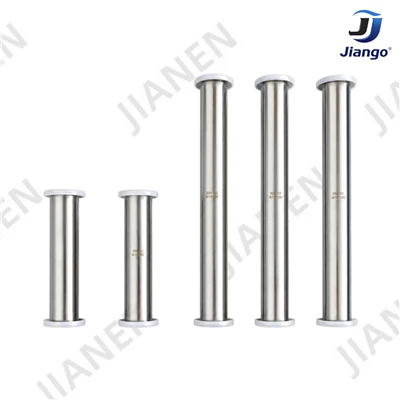
Stainless Steel Pipe Fitting So if you’re tired of your GPUs throttling mid-training, your power bills going through the roof, or downtime costing you thousands, let’s chat. We’ll walk you through the options, run the numbers on your specific setup, and make sure you get a dielectric fluid solution that actually works for your AI needs.
Wenzhou Jianen Fluid Equipment Co., Ltd.
Wenzhou Jianen Fluid Equipment Co., Ltd. is one of the most professional ai data liquid-cooling manufacturers and suppliers in China, featured by quality products and good service. Please rest assured to buy bulk ai data liquid-cooling from our factory.
Address: No.655 Mingzhu Road ,Longwan District, Wenzhou, China
E-mail: annielin@lzginter.com
WebSite: https://www.jianen-sanitary.com/
