If you’ve ever walked the floor of a metal fabrication shop, automotive prototyping lab, or aerospace part manufacturing facility, you’ve probably seen a 3D laser cutting machine at work. Those bright, focused beams slicing through curved metal panels, intricate aerospace components, or deep-draw parts in a single pass are engineering marvels. As a supplier of these machines, I’ve spent the last decade troubleshooting them in customer facilities, sitting through late-night call-backs when a production line grinds to a halt, and listening to every frustration a shop owner or operator will admit to about their equipment. For all their precision, speed, and versatility, 3D laser cutting machines aren’t flawless. Over time, we’ve noticed several common problems that pop up across industries, and while many are fixable, understanding why they happen can save a shop hundreds of hours of downtime and thousands of dollars in lost revenue. 3D Laser Cutting Machines
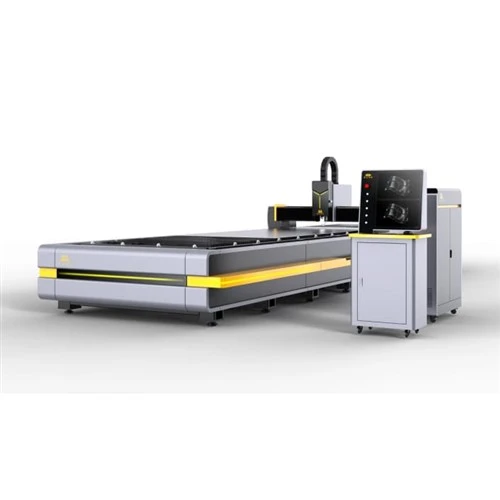
Let’s start with the most pervasive issue we see, and it’s something even the largest aerospace manufacturers deal with regularly: dimensional inaccuracy in cuts, especially on larger parts. This isn’t just a “one-off” error where a single hole is a fraction of a millimeter off. It’s a gradual shift that creeps in over weeks or months, and it’s often so subtle that operators brush it off as a minor calibration error—until it ruins a full batch of custom automotive door panels or aerospace fairings. What causes this? Most people don’t realize that 3D laser cutting machines have two separate axes systems that interact constantly: the linear axes that move the cutting head, and the rotary axes used to work with curved or cylindrical parts. Every time the machine moves the cutting head at high speeds, even a fraction of a millimeter of backlash in the rotary axis, or minor wear in the linear guide rails, can compound over a long cut. A 2-meter curved aerospace panel might have a total error of 0.5mm over its length, which is small enough to pass a cursory inspection but too big to fit into a pre-assembled aircraft wing section. We’ve also found that many operators skip environmental checks. Laser cutters are sensitive to ambient temperature shifts. If a machine is installed in an unconditioned shop where temperatures swing 10 degrees Fahrenheit between morning and afternoon, the machine’s steel frame expands and contracts. Even a tiny expansion of the beam delivery system or the linear axes throws the cut path off. One customer in Texas told us they lost $12,000 in a week because they ran a batch of stainless steel exhaust pipes during a midday heat spike, and every pipe’s flange hole was 0.8mm too small. They fixed it once they added an HVAC zone around their laser cutter, but that was a costly lesson.
Next up, poor cut edge quality—bumbers, dross buildup, or inconsistent surface finish. Dross, that stubborn molten metal residue that sticks to the bottom edge of a cut part, is probably the number one complaint we hear from operators. They spend hours grinding or sanding it off, adding labor costs that eat into profit margins, and even then, some dross is so embedded that it compromises part integrity for aerospace or medical devices. What causes this? It’s not just the laser power, as many people assume. A common mistake is incorrect assist gas pressure or type. For example, cutting thin aluminum requires a high-pressure nitrogen assist gas to blow away molten material, but if the nozzle is dirty or the gas pressure is set too low, the molten metal can’t escape, leading to dross. We also see issues with nozzle alignment. The cutting nozzle, which focuses both the laser beam and the assist gas, needs to be perfectly centered on the beam path. Over time, nozzles get damaged from collisions with parts (super common when operators are in a hurry) or corrode from the assist gas, throwing the alignment off by even 0.1mm. That’s enough to cause the laser beam to spill over the edge of the cut kerf, melting material back onto the part instead of removing it. Another underdiscussed factor is focal length drift. The laser’s focal point—where the beam is most concentrated—needs to be adjusted for different material thicknesses, but if the focal lens is dirty or scratched, the focal point shifts unexpectedly. For example, cutting 10mm steel with a scratched lens might result in a 2mm wide kerf instead of the 1mm wide kerf specified, leading to inconsistent edges and more dross.
Then there’s the problem of inconsistent piercing times, which is a huge bottleneck for production speed. Piercing is the process where the laser burns a small hole through the material before the cutting head starts moving along the cut path. For thin materials, piercing takes 1-2 seconds, but for thick metal, it can take 10 or more seconds. If piercing times fluctuate randomly, a job that should take 10 minutes might take 20, because every few cuts the machine has to double or triple the piercing time. This is especially frustrating for high-volume jobs, like cutting 100 steel brackets for a construction project. We traced this issue back to two main sources. First, damaged or worn consumables: the nozzle, focal lens, and ceramic ring that sits around the nozzle. Ceramic rings can develop tiny cracks over time from heat cycles, which disrupt the assist gas flow during piercing. A cracked ceramic ring will cause the assist gas to diffuse instead of focusing on the piercing point, making the laser work harder and longer to burn through the material. The second source is outdated process parameters. Many shops load a one-size-fits-all cutting file into their machine and never adjust it for material variations. Even a small batch of mild steel from a new supplier might have slightly different thickness or alloy content than the shop’s standard material. If the machine’s piercing parameters are set for the old material, it will take too long to pierce the new batch, or even fail to pierce at all, leading to scrap parts. One job shop in the Midwest told us they increased their production capacity by 15% just by updating their machine’s parameters to match material lot numbers, instead of using a generic preset.
Another problem we see regularly is beam delivery system issues, specifically fiber laser core degradation. For 3D laser cutters, most modern models use fiber lasers, which deliver a concentrated beam through a fiber optic cable instead of mirrors. That sounds like a better, more reliable system, but the fiber core can degrade over time, especially if the machine is operated at high power for long hours, or if there’s a backlog of jobs that requires the laser to run 24/7. Degradation happens when small imperfections in the fiber core grow, scattering the laser beam so it’s no longer a tight, focused spot. The result is cuts that are slower, have rougher edges, and higher dross buildup. What makes this tricky is that degradation is gradual, so operators might not notice it until the laser’s power drops by 10-15%, which is enough to derail production. We’ve had customers come to us saying their 2kW fiber laser is now performing like a 1.7kW laser, and they thought it was a nozzle issue, but it turns out the core is degraded. Avoiding this problem is simple: don’t run the laser at full power 24/7, schedule regular core inspections every 2,000 hours of operation, and avoid bumping or twisting the fiber cable, which can cause micro-damages that accelerate degradation.
Then there’s downtime from control system glitches, which might seem like a software issue but often ties back to machine hardware, not just coding. Operators will call us saying the machine stops mid-cut for no reason, or it crashes the path of the cutting head, damaging the nozzle and the part. A common cause here is signal interference. 3D laser cutting machines use a variety of sensors to track the cutting head’s position, the assist gas pressure, and the laser power. If the machine is installed near other heavy industrial equipment—like CNC mills, welders, or even forklifts that run on electric power—the electromagnetic waves from those devices can disrupt the control system’s signals. For example, a nearby welder might cause the machine’s position sensor to read incorrectly, making the cutting head veer off the cut path. We also see issues with outdated control software. Many shops keep their machine’s software untouched for years, but manufacturers release updates that fix signal bugs and add safety features. We had a customer in Germany who had their machine stop mid-cut three times a week until we updated their control software. The update fixed a bug that was causing the laser to shut down when the machine’s ambient temperature sensor spiked, which had nothing to do with the job they were running—it was just a quirk of their unconditioned shop.
Finally, let’s talk about operator error, which is by far the most common problem we encounter, but it’s rarely talked about because operators don’t want to admit they made a mistake. Most of the time, it’s not that the operator is untrained—it’s that they’re overworked, running three jobs at once, or cutting corners to meet a deadline. For example, an operator might skip the weekly nozzle cleaning because it takes 10 minutes, only to have dross build up on cuts later. Or they might use a nozzle designed for thin metal on a thick material, leading to poor edge quality. We’ve found that one of the best ways to reduce these operator-related issues is to create simple, visual checklists for daily and weekly machine maintenance. A checklist that says “Check nozzle alignment, clean lens, verify assist gas pressure” takes 15 minutes, and it prevents 80% of the common operator-caused problems. Another thing is training: many machine operators only get a day of training when they first get the machine, and they never learn about the fine tuning that makes the difference between a good cut and a great cut. We offer annual refreshers for our customers’ operators, and we’ve seen that after these training sessions, their defect rates drop by up to 30%.
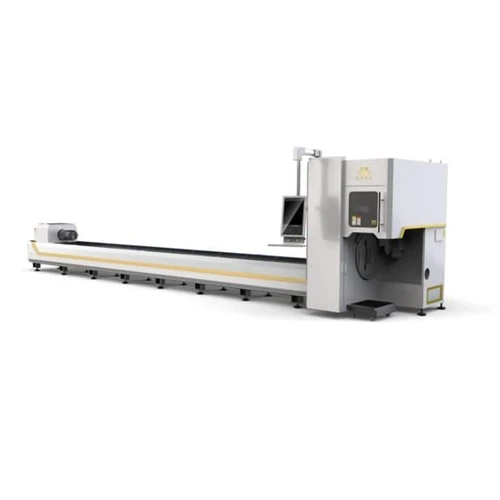
As a supplier, our goal isn’t to highlight problems to make our machines look bad—it’s to be transparent about what shops can expect, so they can avoid downtime and make the most of their investment. Every 3D laser cutting machine will have issues over time, but most of these common problems are preventable with regular maintenance, small adjustments to operating parameters, and proper operator training. If you’re running a fabrication shop or an engineering facility and you’re dealing with any of these issues—dimensional errors, bad edges, slow piercing, or unexpected downtime—reach out to us to discuss solutions tailored to your operations. We can help you diagnose the root cause, adjust your machine’s settings, and schedule maintenance to get your production back on track.
Coil Fed Laser Cutting Production Lines References
- Laser Institute of America. (2021). Practical Guide to 3D Laser Cutting for Industrial Applications. LIA Press.
- American Society of Mechanical Engineers. (2022). Performance Standards for 3D Laser Cutting Systems. ASME B94.55.
- Metal Fabricators Association. (2023). Common Failure Modes in Fiber Laser Cutting Machines. MFA Technical Bulletin No. 118.
- International Organization for Standardization. (2020). Safety Requirements for Laser Processing Machines. ISO 11153:2020.
Yongkang City Bohong Intelligent Equipment Co., Ltd.
As one of the most reliable 3d laser cutting machines manufacturers and suppliers in China, we also support customized service. With abundant experience, we warmly welcome you to buy advanced 3d laser cutting machines from our factory. If you have any enquiry about quotation, please feel free to email us.
Address: No. 176 Yinggui North Road, Chengxi New Area, Yongkang City, Zhejiang Province
E-mail: bohonglasertech@Outlook.com
WebSite: https://www.bohonglasertech.com/
