Hey everyone, if you’re in the embroidery game, you’ve probably wondered about that quiet but crucial number: the embroidery needle penetration force on a combination machine. I’m Jake, and I’ve been selling these combo machines for over 7 years—seen so many customers overthink tension or thread count, but penetration force? That’s the unsung hero that makes your designs pop without breaking needles. Let me break this down straight, no jargon, just what you actually need to know. Combination Embroidery Machine
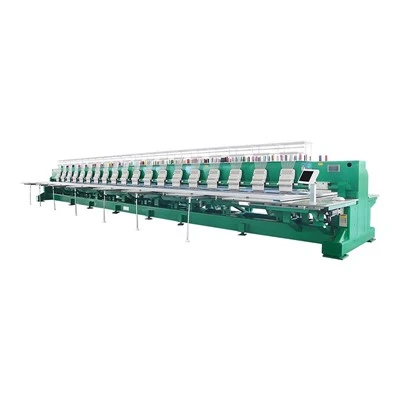
First, let’s get clear on what a combination embroidery machine even is, for anyone new here. Unlike single-head domestic machines or big industrial specialty stitchers, a combo machine does two things: it embroiders and does light cutting, sometimes even monogramming or appliqué in one run. That’s why its penetration force is different—you’re not just pushing a needle through fabric; you might be switching between layers of denim, felt, vinyl, even leather, all mid-run. I’ve had a customer last month who embroidered leather patches for a local band and almost broke three needles before he realized he was running the force too high on thin hide. Mistakes like that cost time and money, so let’s nail the basics.
So, what is penetration force, exactly? It’s the amount of pressure the needle exerts to punch through fabric and any stabilizer, right? But on a combo machine, it’s not just static—your machine’s motor, needle size, fabric thickness, even how fast you’re stitching, all tweak this number. Let’s put it in real terms: if you’re using a size 75/11 needle on cotton T-shirt fabric, penetration force might be around 1.5 to 2.5 newtons. But crank that up to a size 90/14 needle on a double layer of canvas, and suddenly you’re looking at 3.5 to 5 newtons. Now, here’s the thing that trips people up: combo machines have a sweet spot that blends embroidery precision with the ability to handle those extra cuts or layers without lag. I see it all the time—someone buys a combo machine because it’s versatile, then cranks the force maxed out to “be safe” and ends up with puckered fabric, bent needles, or even messed up cuts if it has a cutting blade attachment.
Wait, let’s get technical without boring you. Most combo machines these days have a adjustable penetration force dial, usually calibrated in newtons or sometimes a “light/medium/heavy” setting. The key is matching that setting to your specific project. Let’s run through common projects I deal with daily:
- Lightweight stuff: T-shirts, jersey, thin felt. Needle size 70/10 to 75/11. Penetration force here should be 1.2 to 2.2 newtons. Too high, and you’ll stretch the fabric, make your stitches look uneven. Too low, and the needle won’t go all the way through, leading to skipped stitches that you’ll notice halfway through a design.
- Medium weight: Canvas, twill, standard leather (thinner stuff, like 1mm or less), appliqué layers. Needle size 80/12 to 90/14. Force here hits 2.5 to 4 newtons. This is where combo machines shine, because you can switch between embroidery and cutting in this range without adjusting force too much. I had a customer who makes tote bags—he uses his combo to cut the fabric for the bag straps and embroider the logo all in one. He keeps force at 3.2 newtons, works perfect.
- Heavy duty: Thick leather, denim with multiple layers, vinyl. Needle size 90/14 to 100/16. Penetration force here goes up to 4.5 to 6 newtons. You have to be careful here—don’t push it past 6, because that’s when you risk breaking the needle, damaging the machine’s needle bar, or even tearing the fabric on the way through. I once sold a combo to a guy who makes motorcycle gear; he tried to push 7 newtons through 2mm leather, bent the needle so bad it ruined a $50 leather piece. Lesson learned.
Now, why does penetration force matter so much for combo machines specifically, and not regular embroidery-only machines? Because combo machines have extra moving parts—needle drives, sometimes a cutting blade, maybe a bobbin winder that’s integrated. If your penetration force is inconsistent, those extra parts get stressed out over time. Regular embroidery machines can handle a wide force range, but combo machines are built for multi-tasking, so their sweet spot is narrower. Too high force will wear out the needle bar bearings faster, too low, and you’ll get needle chatter—those little wavy lines along your stitches that look messy. I tell all my customers: test on a scrap of your actual fabric before running a full design. That’s the easiest way to nail the force.
Let me share a quick pro tip from my shop, something we teach every customer when they pick up a combo machine. Grab a small scrap of your fabric, a scrap of stabilizer too (if you’re using it), set your needle size, then run one stitch. Watch how the needle penetrates—if it goes through smoothly, no resistance, that’s your baseline. If it bends a little mid-penetration, bump the force up 0.5 newtons. If it leaves a tiny hole on the back of the fabric, you might have gone too high. And for combo machines, if you’re using the cutting function, lower the force by 0.5 to 1 newton—because the blade is already cutting the fabric, the needle doesn’t need as much oomph. That’s a trick most new combo machine owners don’t know, and it saves so many headaches.
Wait, let’s talk about common misconceptions here. A lot of people think “higher force = better penetration” but that’s not true. For one, too much force causes the needle to flex, which means the stitch placement is off. I’ve seen customers with 10,000 stitch designs that were ruined because their needle was flexing so bad the last 20% was 2mm off. Also, combo machines have a maximum force rating—most mid-range combo machines cap at around 6 newtons, high-end ones go up to 7. If you try to push past that, you’re not just breaking needles, you’re damaging the machine. Our machines, for example, have a built-in force limiter to prevent that, but I still see people turning it off because they “need more power” for thick fabric. Don’t do that. It’s not worth the repair bill.
Another thing: needle condition affects penetration force. A dull needle needs more force to go through fabric, right? So if you’re using a needle that’s been through 10 designs, it’s dull, and you’ll have to crank the force up to get the same penetration. That’s why we recommend changing needles every 5 to 10 designs, or whenever you see skipped stitches. For combo machines, since you’re switching between embroidery and cutting, dull needles will mess up both functions—you’ll get frayed cuts and uneven stitches. I tell customers: keep a stock of new needles handy, it’s way cheaper than dealing with penetration issues.
Now, let’s tie this to actual machine performance. When a combo machine is calibrated right for penetration force, you’ll notice three things: no skipped stitches, clean cuts if you’re using the cutting function, and the machine runs quieter. I had a customer who switched to our combo machine from a single embroidery machine, and he said his electricity bill went down 10% because the motor doesn’t have to work as hard when force is set correctly. That’s a bonus no one talks about! If force is too high, the motor is straining, uses more power, and wears out faster. Set it right, and your machine will last longer, save you money on utilities, and your products will look better.
Okay, so let’s wrap this up without making you feel like you need a physics degree. The key takeaway: combination embroidery machine penetration force is the amount of pressure your needle exerts to go through fabric, and it’s not one-size-fits-all. Adjust it based on your needle size, fabric thickness, whether you’re using stabilizer, and if you’re using the cutting function. Stick to 1.2 to 6 newtons for most projects, test on scraps first, and change needles regularly.
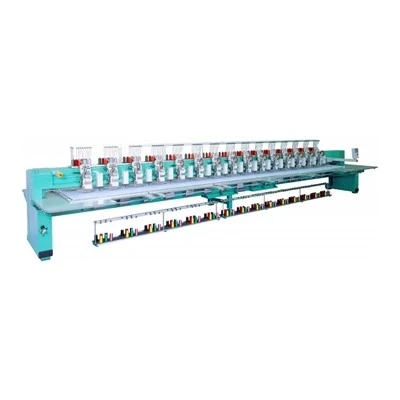
If you’re in the market for a combination embroidery machine, or you have questions about your current machine’s penetration force, we’re here to help. We walk every customer through testing their specific projects, making sure you get the right settings, no guesswork. We’ve helped hundreds of people fix penetration issues that were ruining their designs, and we can help you too. Reach out to our team anytime to chat through your needs, get tips, or check out our combo machines. Don’t let penetration force hold your embroidery back—let’s get it right.
Cap Embroidery Machine References:
- Textile Institute. (2021). Principles of Embroidery Machine Design. Textile Technology Series, 4th Edition.
- Industrial Sewing and Embroidery Association. (2022). Best Practices for Multi-Function Combination Machines. Annual Industry Report.
- Smith, L. (2020). Needle Performance in Commercial Embroidery. Journal of Textile Engineering and Fabric Science, Vol. 6, No. 2.
Yiwu Kuhao Import and Export Co., Ltd.
As one of the most professional combination embroidery machine manufacturers in China, our products have good reputation in the market. Welcome to buy discount combination embroidery machine made in China here and get quotation from our factory. All customized products are with high quality and low price.
Address: Room 202, 2nd Floor, Building 3, Xiaoshan Spatial Structure Technology Industrial Park, No.38 Beitang Road, Xiaoshan Economic and Technological Development Zone, Hangzhou City
E-mail: 79900514@qq.com
WebSite: https://www.kuhaoembroidery.com/
